
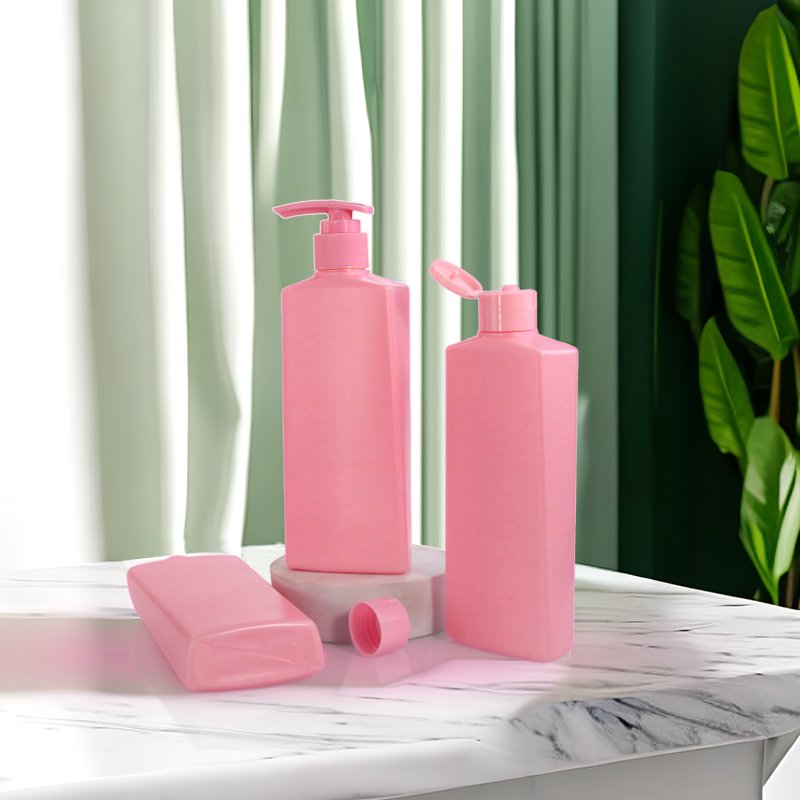
Biodegradable resins such as PLA and PHA can break down into carbon dioxide, water and biomass under controlled composting conditions, but they are not a drop-in replacement for PET or HDPE. They suit short-shelf-life, dry or low-moisture formulas, and they require industrial composting for most claims.
Cosmetic brands hear 'biodegradable' and imagine a bottle that vanishes in the garden. The reality is more specific. PLA needs heat and humidity that a home compost heap rarely reaches. PHA is more tolerant but costs more and still needs the right environment. Both give up some barrier performance against moisture and oxygen compared with conventional plastics, which limits the formulas they can protect. This guide explains what the terms mean, which standards matter, and where a biodegradable bottle fits in a portfolio that still relies on PET, HDPE and PETG for performance.
Biodegradable resins at a glance
- What they are: PLA is made from fermented plant starch, usually corn. PHA is produced by microbes and breaks down in a wider range of environments.
- Composting standards: ASTM D6400 and EN 13432 define industrial compostability. Home composting claims need separate evidence such as OK Compost HOME.
- Barrier limits: Both PLA and PHA absorb more moisture and let more oxygen through than PET or HDPE, so they suit dry or short-life formulas.
- Cost: Biodegradable resins typically cost 2-4x conventional virgin resin, and volumes are smaller, so MOQs often rise.
- ShiJin: 1,000+ open molds in PET, HDPE and PETG; MOQ 5,000 units; 15-25 day lead times. We advise whether your formula suits a biodegradable resin or a conventional recyclable alternative.
What Does 'Biodegradable' Actually Mean?
Biodegradable means a material can be broken down by microorganisms into carbon dioxide, water and biomass. Compostable means it is biodegradable under defined conditions and leaves no toxic residue. The two words are not interchangeable, and 'biodegradable' alone says nothing about how long the process takes or where it must happen.
Compostability is the stronger claim. A compostable bottle must meet a standard such as ASTM D6400 in the United States or EN 13432 in Europe. Those standards set temperature, humidity, time and disintegration limits, and they ban substances that harm soil or plants. Without one of these certifications, a 'biodegradable' label is mostly a marketing word.
Oxo-degradable plastics are a different category and are not truly biodegradable. They fragment into microplastics when exposed to oxygen and heat, and the European Union Single-Use Plastics Directive restricts them. Brands should avoid suppliers offering oxo-degradable additives as a sustainability solution, because the claim does not hold up under scrutiny or regulation.
PLA vs PHA: What is the Difference?
PLA, or polylactic acid, is the most widely available biodegradable resin for packaging. It is made by fermenting plant starch, usually corn, into lactic acid and then polymerising it. PLA has good clarity and stiffness, similar to PET in appearance, but its heat resistance is lower and it becomes soft above about 60 degrees Celsius.
PHA, or polyhydroxyalkanoate, is produced by microbes that convert feedstock such as vegetable oil or sugar into polymer granules. PHA grades vary widely, but the material generally tolerates higher temperatures and more moisture than PLA. Some PHA grades can break down in marine or soil environments, though most commercial claims still centre on composting.
| Property | PLA | PHA |
|---|---|---|
| Source | Fermented plant starch, usually corn | Microbial fermentation |
| Heat resistance | Lower, softens near 60°C | Higher, grade dependent |
| Moisture barrier | Lower than PET or HDPE | Better than PLA, still below conventional |
| Typical composting | Industrial composting required | Industrial or some home grades |
| Relative cost | 2-3x conventional resin | 3-5x conventional resin |
The practical difference is tolerance. PLA is cheaper and clearer but more fragile in hot or moist supply chains. PHA is tougher and more forgiving but still expensive and produced by fewer suppliers. Most cosmetic brands choose PLA for cost and switch to PHA only when the formula or the market demands better performance.
Which Certifications Should You Trust?
Third-party certification turns a claim into evidence. In the United States, ASTM D6400 is the standard for industrial compostability of plastics, and the Biodegradable Products Institute, or BPI, certifies products against it. In Europe, EN 13432 covers industrial compostability, and TÜV Austria issues OK Compost and OK Compost HOME labels for industrial and home conditions respectively.
A certificate should name the exact material grade, the thickness tested, and the facility or test house. Ask the supplier for the certificate number and check it with the issuing body. A vague letter from a resin trader is not the same as a product-level certificate, because wall thickness, additives and colourants can change whether the final bottle passes.
Claims should match the market's infrastructure. An industrial-compostable bottle sold in a country with no industrial composting collection will still end up in landfill or incineration, so the environmental benefit depends on the whole system. Our LCA guide explains why the disposal route is as important as the material choice.
What Formulas Can Live in a Biodegradable Bottle?
Barrier performance is the limiting factor. PLA and PHA transmit more water vapour and oxygen than PET or HDPE. A water-based serum with a two-year shelf life may lose water or oxidise faster in a PLA bottle than in a conventional pack, even with a good closure. Brands often compensate with shorter shelf lives, smaller sizes, or secondary cartons.
Dry and anhydrous formulas are easier fits. Powders, solid balms, anhydrous butters, bath salts and dry shampoo bottles are less sensitive to moisture ingress. Essential oils and alcohol-based products need compatibility testing, because some botanical extracts and solvents can stress biodegradable resins over time. Our chemical compatibility guide lists the tests that predict whether a formula will stay stable inside its pack.
Colour and fragrance also matter. Dark or opaque biodegradable bottles can hide yellowing better than clear ones, and some fragrances interact with the ester groups in PLA. A twelve-week accelerated ageing test at elevated temperature and humidity is the minimum due diligence before committing to a biodegradable pack.
How Do Cost and MOQ Change?
Biodegradable resin prices are typically two to four times those of virgin PET or HDPE. The gap narrows with scale and with oil-price cycles, but it rarely disappears. That increase flows directly into the unit cost of the bottle, so the brand must decide whether the sustainability story justifies the price premium at shelf.
Supply is more concentrated. Fewer compounders produce food- or cosmetic-grade PLA and PHA, and custom colours or additive packages often carry higher minimums. A brand that wants a bespoke colour may face a resin MOQ before the bottle MOQ, which can push the first order well above the normal 5,000-unit packaging minimum.
Tooling is usually the same. Most existing PET bottle molds can run PLA or PHA with process adjustments, so the conversion cost does not necessarily change. The main increases are in the resin itself, the certification, and the longer qualification testing. Ask for a landed cost that includes both the material premium and the extra lead time.
When Does a Biodegradable Bottle Make Sense?
A biodegradable bottle makes sense when three conditions line up: the formula tolerates the barrier limits, the target market has composting infrastructure, and the brand can tell a clear disposal story. If any one of those is missing, a recyclable PET or HDPE bottle with recycled content is often the lower-risk choice.
Mono-material design helps either path. A bottle, closure and label made from the same polymer family are easier to recycle. A biodegradable bottle paired with a conventional pump becomes hard to compost and hard to recycle, because the consumer must separate parts the supply chain cannot process together. Our mono-material design guide covers how to build a pack that fits one end-of-life stream cleanly.
At ShiJin we run 1,000+ open molds in PET, HDPE and PETG, with MOQ from 5,000 units and 15-25 day lead times. We can audit your formula, target market and shelf-life needs, then recommend whether a biodegradable resin, a recycled conventional resin, or a mono-material recyclable design is the better fit. Our PCR vs virgin guide explains the recycled-content route side by side with the biodegradable option.
Frequently Asked Questions
Are biodegradable bottles the same as recyclable bottles?
No. Biodegradable means the material can break down through microbial action, usually under composting conditions. Recyclable means the material can be collected, sorted and reprocessed into new products. A PLA bottle is biodegradable under the right conditions but is not recyclable in most mainstream PET or HDPE streams, and it can contaminate them.
Can I put a PLA cosmetic bottle in my home compost bin?
Usually not. Most PLA needs the higher temperatures and controlled humidity of an industrial composting facility, typically certified to ASTM D6400 or EN 13432. Some PHA grades are certified for home composting through labels such as OK Compost HOME, but the claim must be verified for the exact bottle grade and thickness.
Which cosmetic formulas work best in biodegradable packaging?
Dry, anhydrous or short-shelf-life formulas work best, because PLA and PHA have higher moisture and oxygen transmission than PET or HDPE. Powders, solid balms, bath salts and dry shampoos are good candidates. Water-based serums and lotions with long shelf lives are more challenging and need barrier testing.
What certifications should I ask for?
Ask for ASTM D6400 or BPI certification for the US industrial composting market, EN 13432 for Europe, and OK Compost HOME for home-composting claims. The certificate should name the material grade, wall thickness and test house. Vague supplier letters or internal test reports are not enough for a market-facing claim.
Why are biodegradable resins more expensive than PET or HDPE?
They are produced at smaller scale from feedstocks such as corn starch or microbial cultures, and fewer suppliers offer cosmetic- or food-grade grades. The certification and qualification process also adds cost. Prices are typically 2-4x conventional virgin resin, and custom colours can carry additional minimums.
Matching bottle options for this topic
Real molds from our library in a comparable material and size class — each product page carries the full spec sheet, neck size, MOQ and lead time.
- PET Cosmetic Bottle 150ml — SKU SJT0123-150
- PETG Cosmetic Bottle 250ml — SKU SJE1684-250
- PET Cosmetic Bottle 500ml — SKU SJT0056-500
- PET Cosmetic Bottle 1000ml — SKU SJT0112-1000
Not sure if biodegradable is right for your formula?
Send us your product details. We can run a compatibility review against PET, HDPE, PETG, PLA or PHA options and recommend the lowest-risk path, with MOQ from 5,000 units and 15-25 day lead times.
Browse Mold Library Request a Quote