
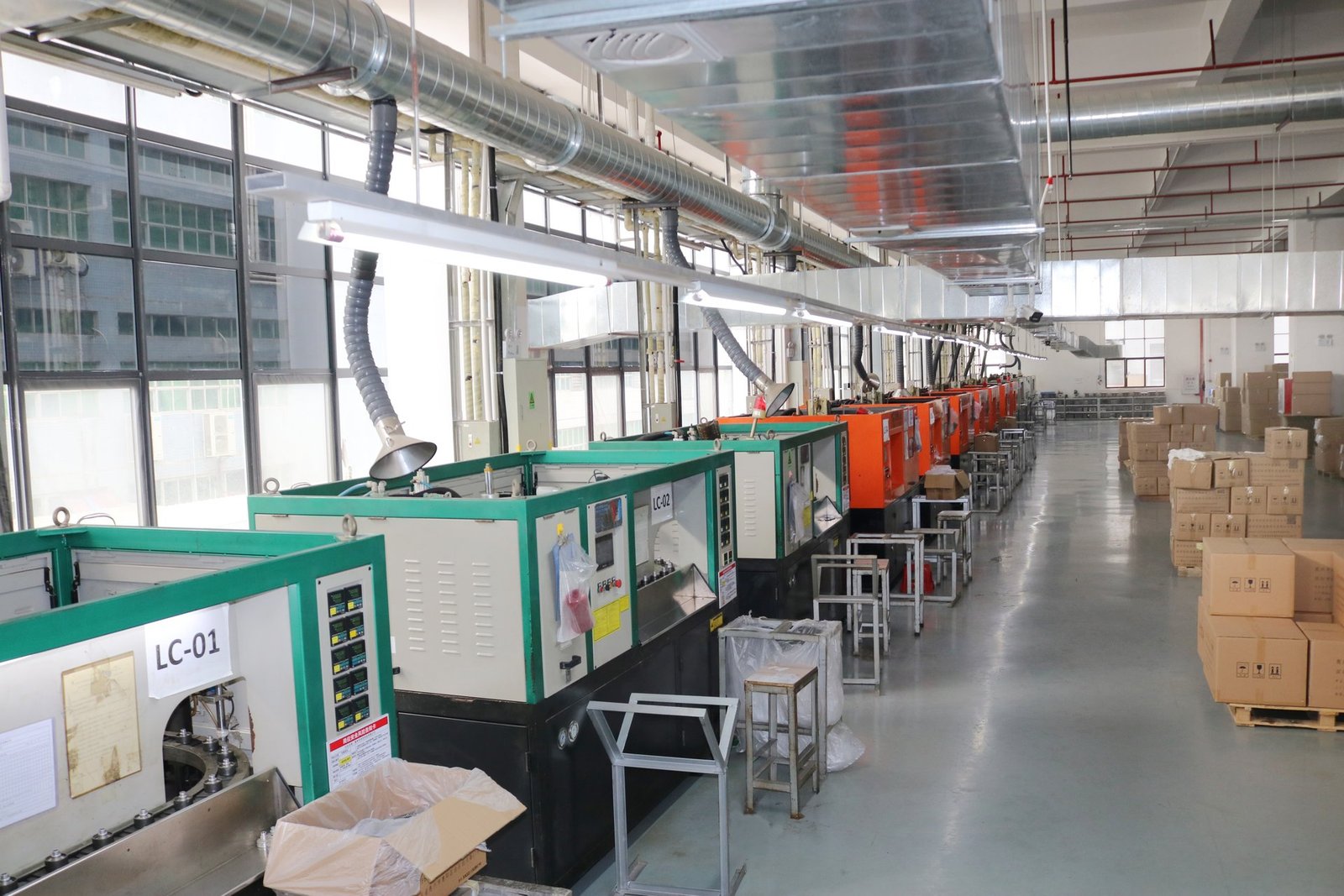
Every bottle in your hands started as a small pellet of resin. Between that pellet and a finished, decorated cosmetic bottle are six tightly controlled steps — and the difference between a good supplier and a great one lives in how those steps are run.
This tour walks through exactly how ShiJin's plant turns raw plastic into the PET, HDPE and PETG bottles brands ship worldwide. It is written so buyers can judge a factory by what actually happens on the floor — not just by a photo on a website.
Why the Process Matters to Your Brand
A bottle is only as good as the process behind it. The same resin can yield a crystal-clear, leak-free bottle or a hazy, inconsistent one depending on temperature control, mold precision and QC discipline. When you understand the steps, you can ask suppliers the right questions — and spot the ones who cannot answer.
Consistency is not a feature; it is the outcome of a controlled process. Visit the floor, or ask for the data that proves it.
Step 1 — Resin, Color & Sustainable Content
It begins with the raw material. Virgin PET, HDPE or PETG resin arrives in pellet form, then is blended with a masterbatch for color and, increasingly, with post-consumer recycled (PCR) content for sustainability goals. The blend ratio is recorded per batch so color and composition stay repeatable across re-orders.
Material is dried to the correct moisture level (critical for PET, which is hygroscopic) before it ever touches a machine. Skipping or rushing this step is a common cause of brittle or cloudy bottles.
Step 2 — Injection Molding the Preform
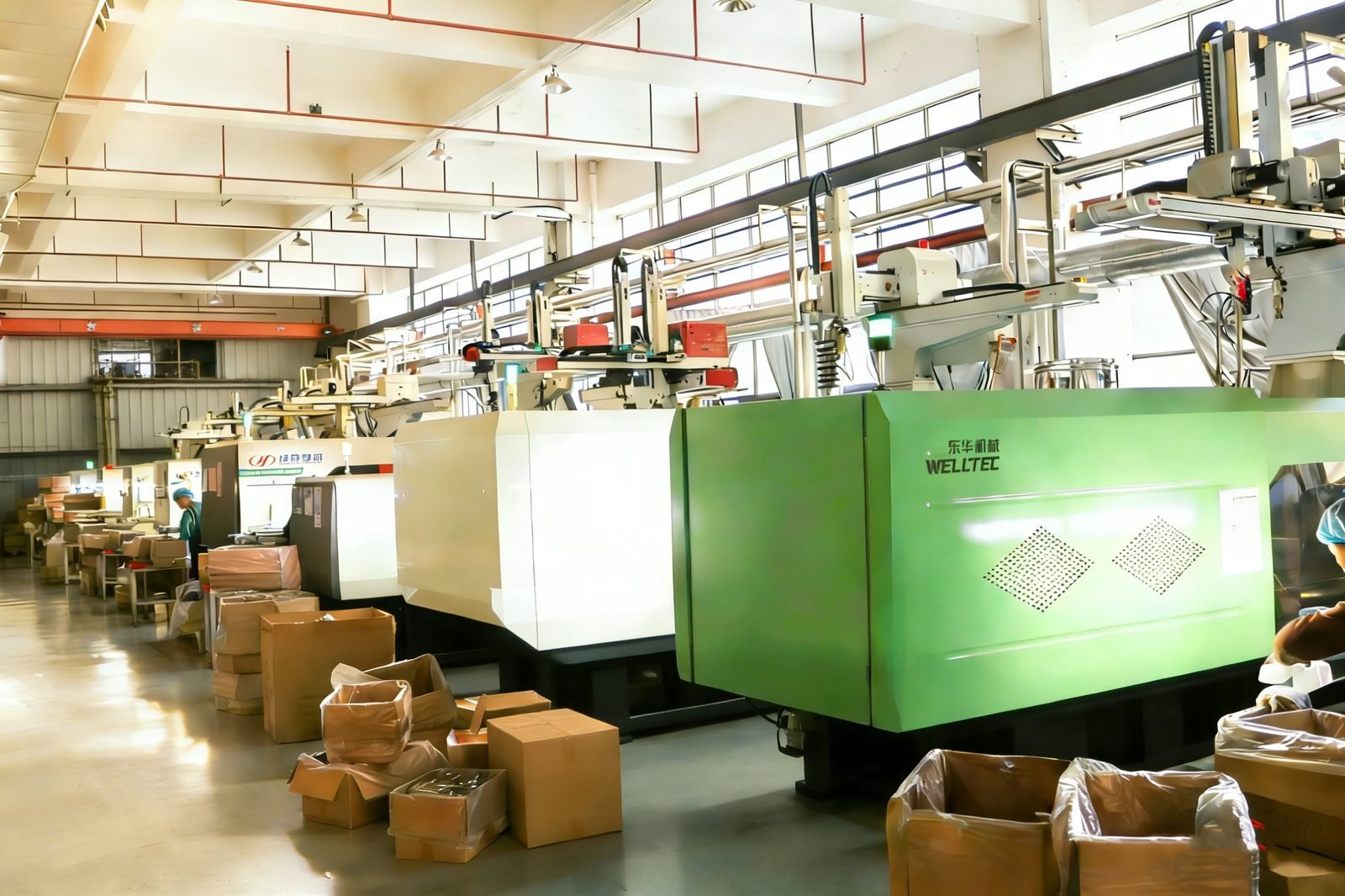
For PET bottles, the first shape is not a bottle at all — it is a preform: a small, thick-walled tube with the thread already molded on top. An injection molding machine melts the resin and injects it into a steel preform mold at high pressure and tight temperature control. The preform's wall thickness and gate quality here determine how evenly the bottle will stretch later.
Step 3 — Blow Molding: Shaping the Bottle
The preform is reheated and inflated against a bottle mold. The technique differs by material:
PET — Injection Stretch-Blow Molding (ISBM / SBM)
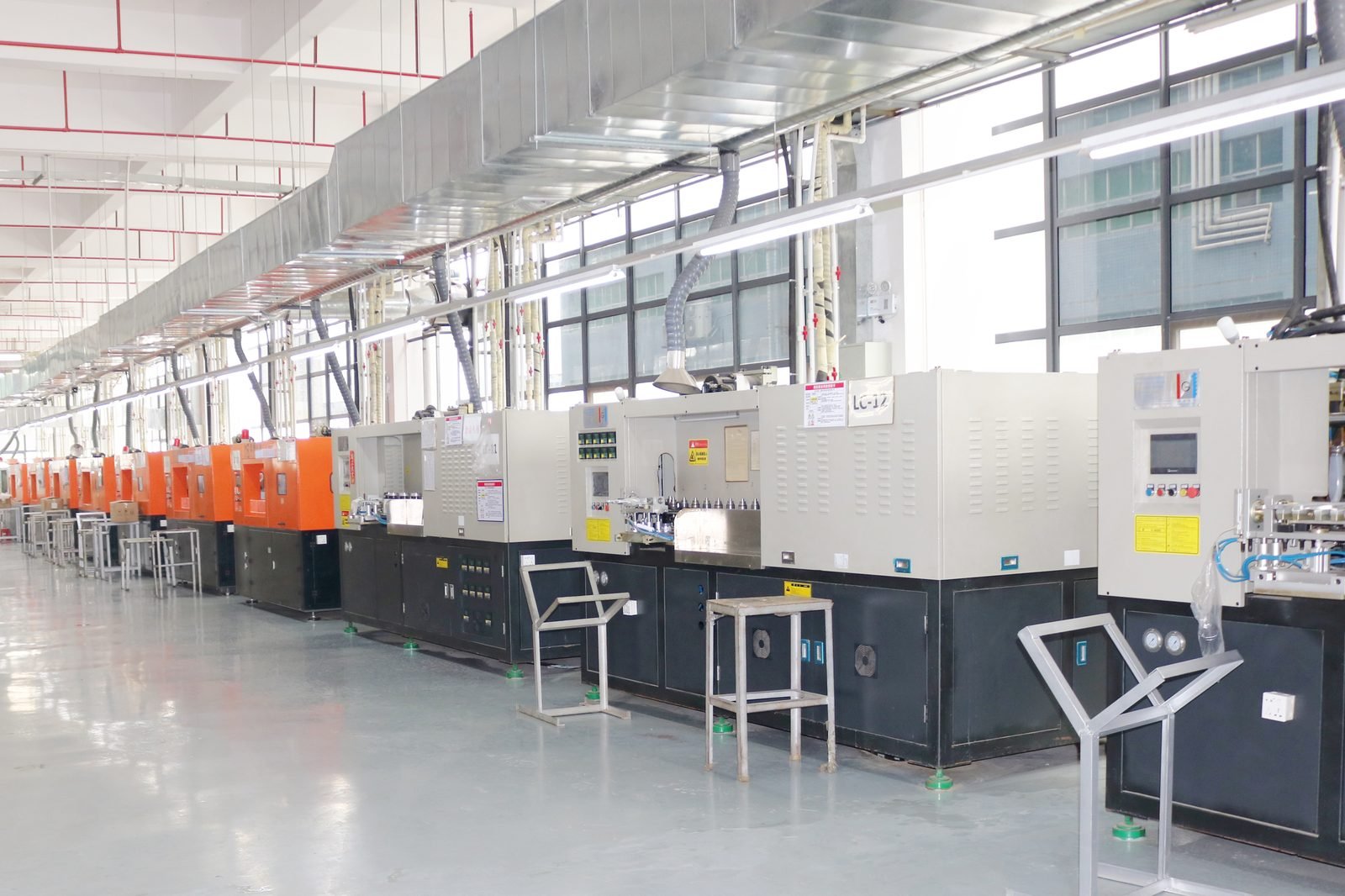
The preform is reheated to a precise temperature profile, then a stretch rod pulls it axially while compressed air blows it radially against the mold. This biaxial orientation is what gives PET bottles their clarity, strength and gas barrier. It is the standard process for water-clear cosmetic and skincare bottles.
HDPE — Extrusion Blow Molding
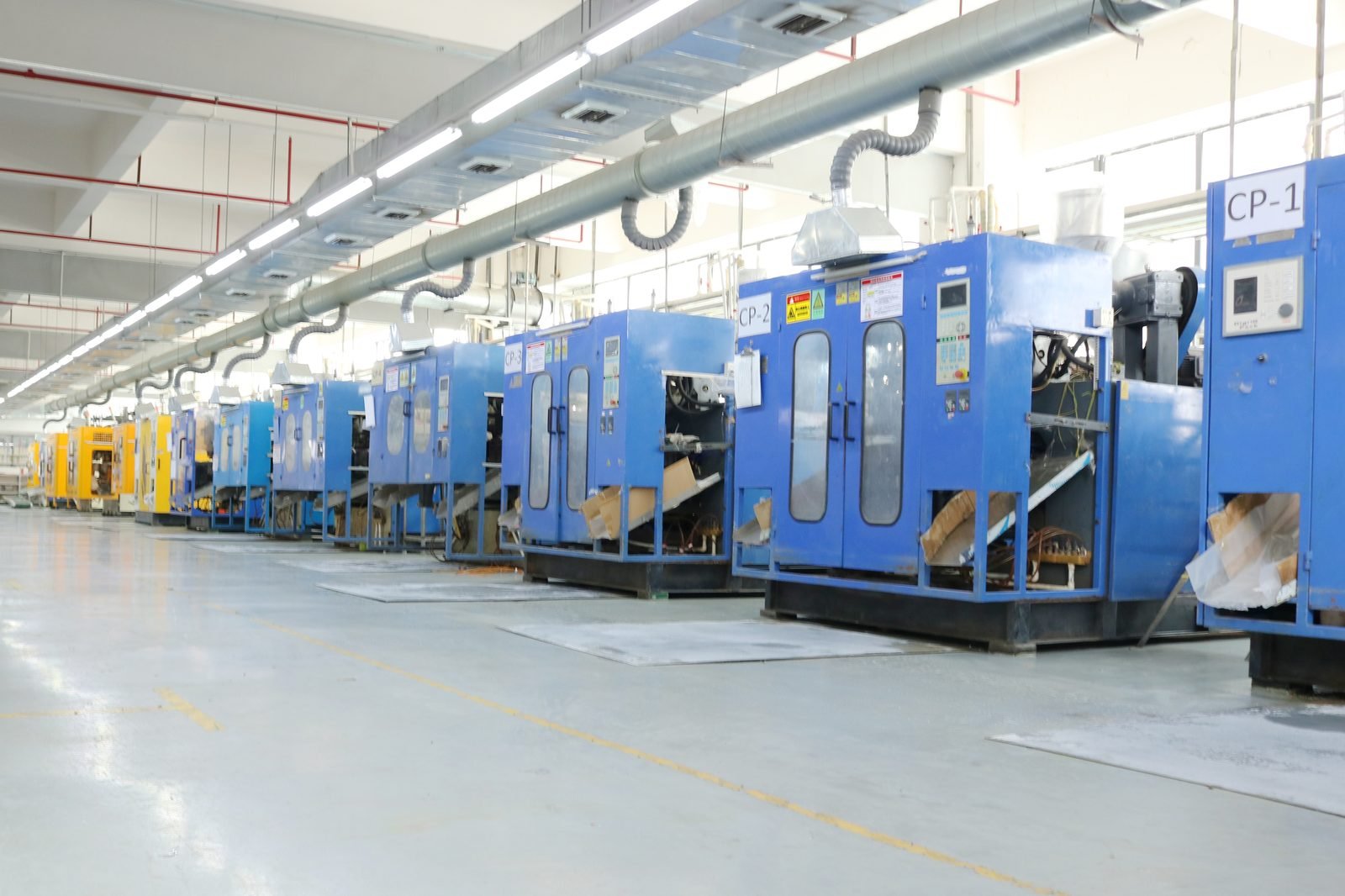
For HDPE, a molten tube of plastic (a "parison") is extruded, captured in a mold, pinched at the base and blown into shape. This continuous process suits opaque, squeezable, chemical-resistant bottles for shampoo, body wash and creams.
Step 4 — In-Line Quality Control
Quality is built in, not inspected in at the end. On the line we run leak testing, weight checks, thread-gauge verification and visual inspection. A dedicated lab handles more demanding checks — impact, stress-crack resistance and migration testing for regulated markets. Batches are traceable to machine, mold and material lot.
Step 5 — Decoration & Finishing
A clear bottle becomes a brand asset at this stage: silk-screen printing, hot-stamp foil, labeling, spray coating or vacuum metallization. Color matching is done against your approved standard, and a production sample is kept on file so re-orders match exactly.
Step 6 — Packing & Shipment
Finished bottles are cleaned, counted and packed in cartons or shrink-wrapped pallets with protective separators to prevent scuffing. Export cartons are reinforced for long ocean transit, and documentation is prepared alongside the goods for smooth customs clearance.
ShiJin's Manufacturing Scale
Our vertically integrated plant lets us control quality and lead time end to end:
This scale means we can run standard molds at volume and still develop brand-exclusive private molds without outsourcing the critical steps.
Frequently Asked Questions
Can I visit the ShiJin factory?
Yes. We welcome qualified brand owners and sourcing partners for factory visits by appointment. Our plant is in Huiyang district, Huizhou city, Guangdong province, China, about 90 minutes from Shenzhen.
What is your minimum order quantity (MOQ)?
Standard MOQ is 5,000 pieces per item. Custom private molds may have different minimums depending on tooling and decoration. Contact sales for a tailored quote.
What is your typical lead time?
Typical production lead time is 15–30 days after sample approval and deposit. Complex custom decoration or new molds may take longer; we confirm a date in writing with every order.
Do you support private molds and OEM?
Yes. We maintain a library of 600+ existing molds and offer custom mold development for brand-exclusive shapes, plus full decoration (printing, labeling, hot-stamp, spray).
Matching bottle options for this topic
Real molds from our library in a comparable material and size class — each product page carries the full spec sheet, neck size, MOQ and lead time.
- PE Cosmetic Bottle 200ml — SKU SJE1852-200
- PET Cosmetic Bottle 250ml — SKU SJT0417-250
- PE Cosmetic Bottle 500ml — SKU SJE1625-500
- PE Cosmetic Bottle 550ml — SKU SJE1909-550
Want to see the plant for yourself?
Book a virtual or on-site factory tour, or request a sample of our standard and custom bottles.
🏭 Book a Tour