Why material choice decides shelf appeal and formula safety
The bottle wall is the first thing a customer touches and the last barrier between your formula and the environment. The three workhorse rigid plastics — PET (Polyethylene Terephthalate), HDPE / PE (High-Density Polyethylene) and PETG (Polyethylene Terephthalate Glycol) — cover almost every cosmetic packaging need, but they behave very differently on clarity, chemical resistance, temperature and recyclability.
Side-by-side comparison
| Property | PET | HDPE / PE | PETG |
|---|---|---|---|
| Clarity | Excellent glass-like | Opaque (translucent possible) | Excellent glass-like |
| Rigidity / feel | Rigid | Flexible | Rigid but tough |
| Impact resistance | Good | Good (flex absorbs) | Excellent |
| Chemical resistance | Good | Excellent | Good–moderate |
| Temperature tolerance | ~60–70 °C | ~90–120 °C | ~60–75 °C (softens lower) |
| Barrier (water / gas) | Good (esp. CO₂/O₂) | Good water, lower O₂ | Moderate |
| Recyclability | #1 widely | #2 widely | Recyclable (often #1 stream) |
| Typical cosmetic use | Toners, serums, facial mists, essences | Lotions, shampoo, body wash, sunscreen | Premium creams, serums, display jars |
| Relative cost | Moderate | Lowest | Higher |
Material deep-dive
PET
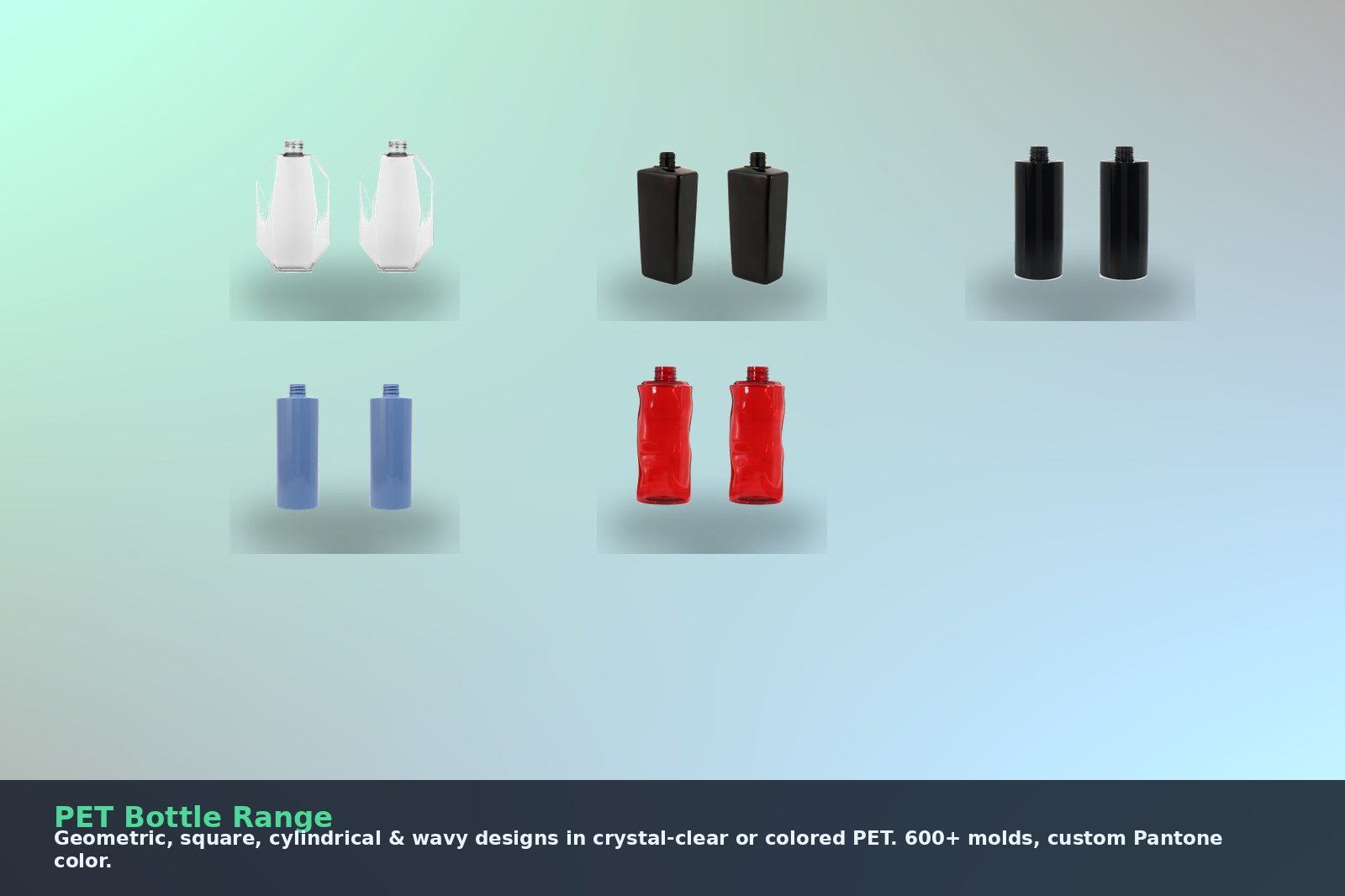
- Best clarity and a strong gas/aroma barrier — ideal for see-through serums, toners and mists.
- Rigid, lightweight, widely recycled.
- Good chemical resistance for most water-based and low-solvent formulas.
- Limit: avoid very hot fills and aggressive solvents.
HDPE / PE
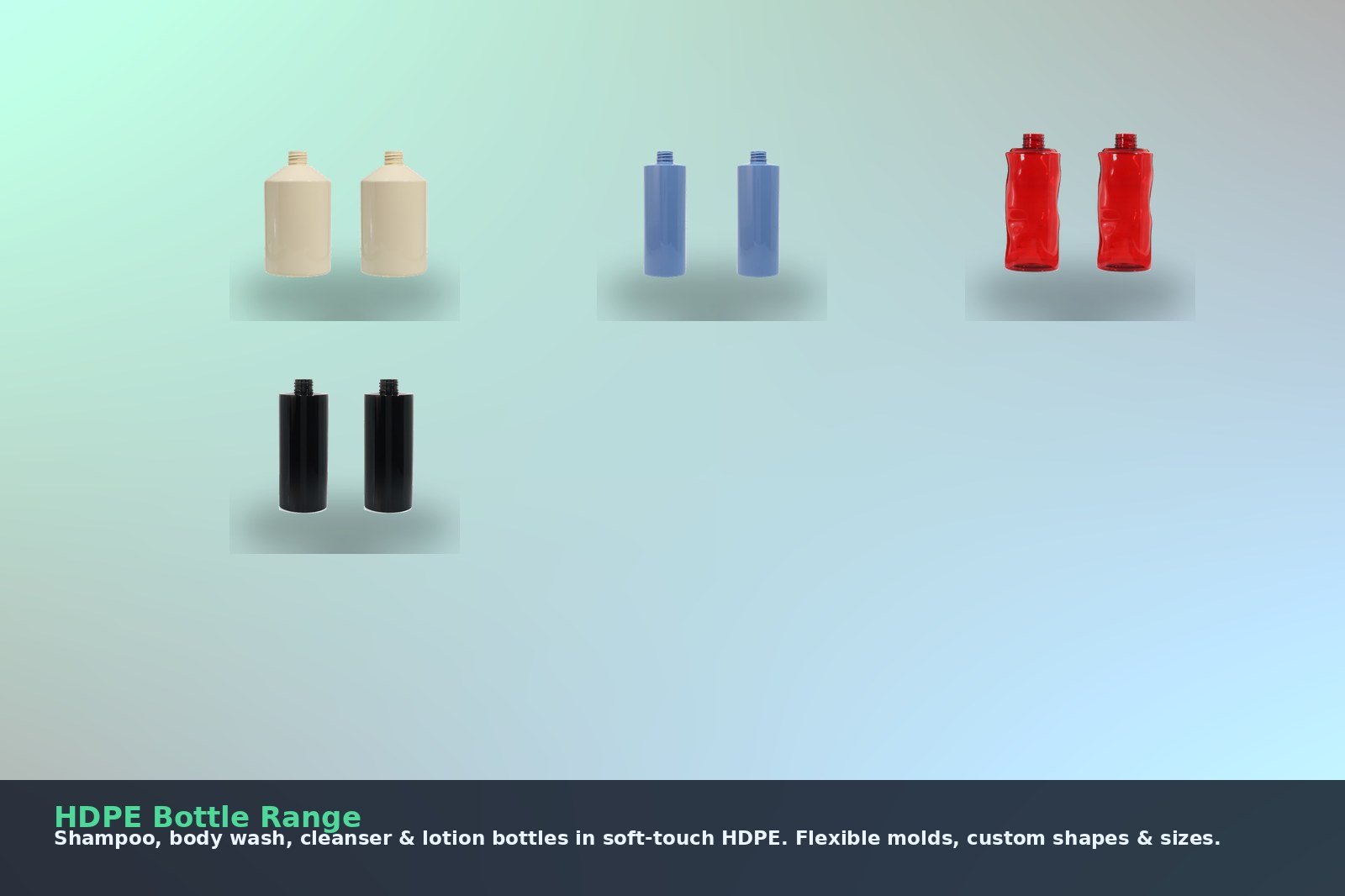
- Broadest chemical resistance of the three — the standard for surfactants, sunscreens and essential-oil blends.
- Opaque by nature; protects light-sensitive actives.
- Highest temperature tolerance and lowest material cost.
- Limit: not clear, so no "premium glass-like" look.
PETG
- Clarity of PET plus superior impact resistance — great for premium, drop-resistant packs.
- Easy to thermoform; vibrant with custom colors and finishes.
- Popular for high-end skincare display and gift sets.
- Limit: lower heat resistance than PET; verify local recycling.
Decision table: match material to product
| Your product | Recommended material | Why |
|---|---|---|
| Facial toner / essence / mist | PET | Clear, light, good barrier; shows off a clean formula. |
| Serum / oil blend (premium) | PETG | Clear + tough; premium hand-feel and drop resistance. |
| Body lotion / cream (opaque) | HDPE | Chemical-resistant, cost-effective, light-blocking. |
| Shampoo / body wash | HDPE | Surfactant-safe; squeezable; cheapest at scale. |
| Sunscreen / SPF | HDPE | Opaque protects UV-sensitive actives; chemical-safe. |
| Display / gift-set jar | PETG | Premium clarity and impact resistance on shelf. |
Compliance & food contact
All three materials are inherently BPA-free thermoplastics. With appropriate food-grade masterbatches and colorants they meet major food-contact frameworks:
- FDA 21 CFR — U.S. food-contact plastics requirements.
- EU 10/2011 — European regulation on plastic materials intended to contact food.
- SGS / ISO 9001 — third-party testing and quality-system certification used by ShiJin Package production lines.
Sustainability & recycling
PET (#1) and HDPE (#2) have the most established global curbside recycling streams. PETG is recyclable and is frequently accepted within the #1 PET stream, but acceptance varies by region — check with your local recycler. For brands with sustainability goals, PCR (post-consumer recycled) PET is a widely available drop-in option that keeps the same clarity and barrier.
Frequently asked questions
Explore bottles by material
Need help specifying the right bottle?
Tell us your formula, capacity and MOQ — we'll recommend material, neck finish and decoration.
Request a quote