
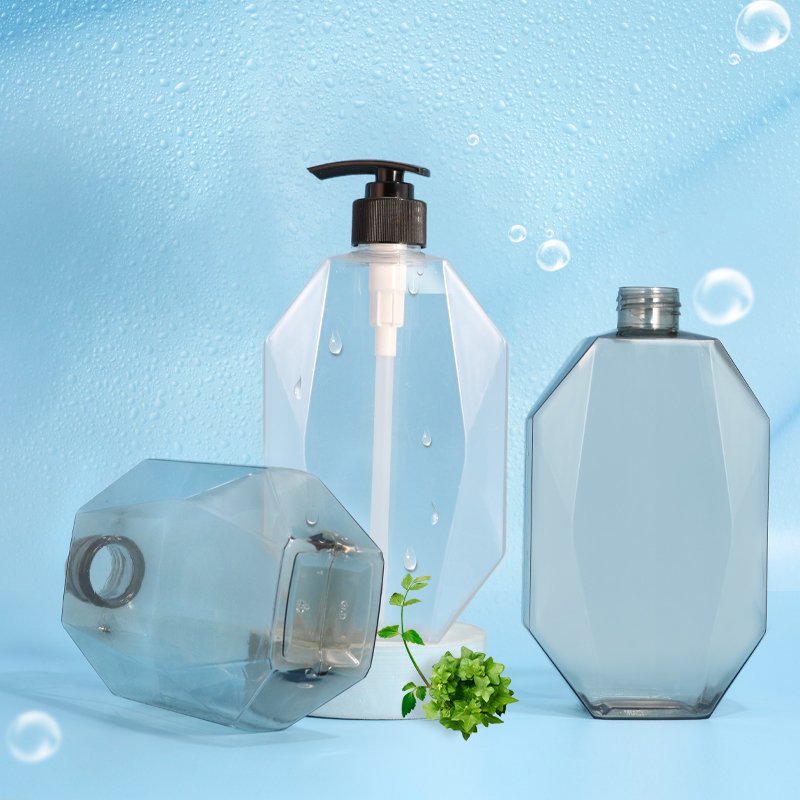
The pump on your bottle is not just a convenience — it is a preservation system. A regular pump draws product through a dip tube exposed to air; an airless pump seals the formula from oxygen entirely. The difference matters most for sensitive actives.
This article explains how each mechanism works, where airless earns its premium, and a simple decision rule for choosing between them.
Airless vs regular pump at a glance
- Regular pump: dip tube draws product; chamber contacts air with each use.
- Airless: vacuum or piston pushes product up; no air enters the chamber.
- Use airless for: vitamin C, retinol, peptides, probiotics, preservative-light formulas.
- Use regular pump for: shampoo, body lotion, hand soap, stable emulsions.
- ShiJin: both systems available across PET / HDPE / PETG, MOQ 5,000.
How a Regular Pump Works
A standard pump bottle has a dip tube reaching the bottom. Each press pulls product up through the tube and dispenses it; the headspace above the liquid stays open to air. That is fine for stable formulas, but it slowly exposes the product to oxygen and, eventually, bacteria at the orifice.
How an Airless Bottle Works
An airless bottle replaces the dip tube with a sealed chamber and a moving disc or piston at the base. Pressing the pump lets atmospheric air in behind the disc, pushing it — and the product — upward. The formula never touches air inside the chamber, and evacuation reaches near 100%, so almost no product is wasted.
Side-by-Side Comparison
| Factor | Regular Pump | Airless |
|---|---|---|
| Oxygen contact | Yes, with each use | Sealed chamber |
| Formula protection | Standard | High (actives safe) |
| Product evacuation | ~90–95% | ~98–100% |
| Cost | Lower | Higher (mechanism) |
| Best formulas | Stable emulsions | Sensitive actives |
| Refillability | Easy | Hard (sealed) |
When to Choose Airless
Use airless when the formula is the product — meaning the active is expensive or fragile:
- Antioxidants: vitamin C (L-ascorbic acid), ferulic acid, CoQ10.
- Retinoids: retinol, retinal — oxygen accelerates breakdown.
- Peptides & probiotics: stability is part of the claim.
- Preservative-light / "clean" formulas: less buffer against contamination.
For these, airless protects efficacy and lets you reduce preservative load — a claim many brands now market.
Cost & Sustainability
Airless costs more per unit because of the internal mechanism. But it can reduce returns, extend shelf life and improve the user's last-dose experience. On sustainability, airless uses more components; if refillability is your goal, a standard pump bottle or a refill-pod system is simpler to recycle and reuse. Match the system to the message.
Decision Rule
A simple test: if the formula loses value when exposed to air, choose airless; otherwise choose a regular pump. When in doubt for a prestige serum, airless is the safer default. For body care and hair care, a regular pump is the economical, perfectly adequate choice. See our closures & dispensing guide for the full closure menu.
Frequently Asked Questions
What is an airless bottle?
An airless bottle uses a vacuum or piston mechanism instead of a dip tube. When you press the pump, a disc at the bottom rises and pushes the product up — no air enters the chamber. This keeps oxygen and contaminants away from the formula.
When should I choose airless over a regular pump?
Choose airless for oxygen- or light-sensitive formulas: vitamin C, retinol, peptides, probiotics and preservative-light or natural formulations. For stable formulas like shampoo, body lotion or hand soap, a regular pump is usually enough and costs less.
Does airless packaging cost more?
Yes, airless systems cost more than a standard pump because of the internal piston or vacuum chamber. The premium is justified when it protects an expensive active or extends shelf life, reducing returns and waste.
Can airless bottles be refilled?
Most airless bottles are designed for single use and are hard to refill cleanly because of the sealed chamber. For a refillable concept, pair a durable airless outer with a sealed refill pod, or choose a standard pump bottle for easy refilling.
Do airless bottles work with all viscosities?
Airless systems handle a wide range of viscosities, from watery serums to richer creams, but very thick or high-solid formulas need the right piston and orifice. Tell your supplier the viscosity so the mechanism is matched to the product.
Matching bottle options for this topic
Real molds from our library in a comparable material and size class — each product page carries the full spec sheet, neck size, MOQ and lead time.
- PET Cosmetic Bottle 70ml — SKU SJT0204-70
- PET Cosmetic Bottle 150ml — SKU SJT0123-150
- PET Cosmetic Bottle 250ml — SKU SJT0050-250
- PET Cosmetic Bottle 280ml — SKU SJT0333-280
Need help choosing the right dispensing system?
We supply both airless and regular pump bottles across PET, HDPE and PETG — matched to your formula and budget.
Browse Mold Library Request a Quote