
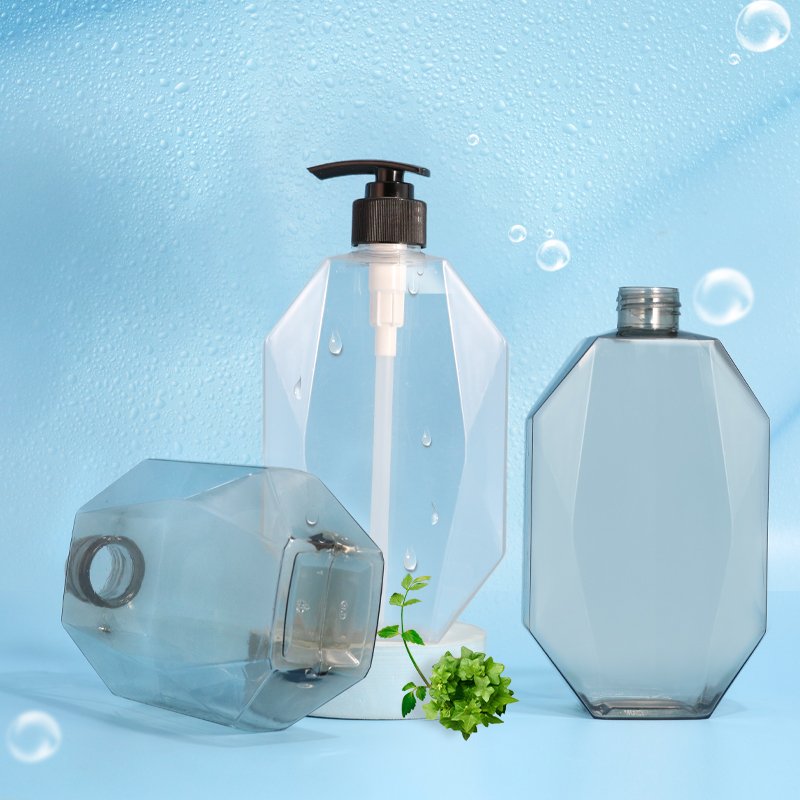
A cosmetic bottle can leave the mould glossy or leave the line frosted. The finish changes how the bottle feels, how print holds, how much light reaches the formula, and what the decoration costs. Glossy is the natural moulded state of PET, PETG and HDPE. Frosted is added later by spray coating or surface etching. Both are valid; the right one depends on your product, your brand and your budget.
Buyers often ask for 'matte' or 'frosted' without naming the method, and the method decides the price. A sprayed matte coat costs more and can complicate recycling, while an etched finish keeps the mono-material stream intact. This guide compares glossy, sprayed matte and etched frosted on five axes: touch, light transmission, print, cost and recyclability, then maps each to the products it suits.
Surface finish at a glance
- Glossy: the natural moulded state of PET, PETG and HDPE; no extra process and the lowest unit cost.
- Spray matte: a coating added after moulding, usually 0.05 to 0.15 USD extra per unit at low volume.
- Acid etch: micro-roughens the surface, keeps the resin mono-material and supports recycling.
- ShiJin: 1,000+ open molds in PET/PETG/HDPE, MOQ 5,000 units, 15-25 day production.
What Are the Three Surface Finishes?
There are really three states, not two, and the third is where most confusion starts. Glossy is what the mould delivers. Sprayed matte is a coating. Etched frosted is a physical change to the surface itself.
A glossy bottle comes straight off the blow moulder or injection line with a smooth, reflective wall. A sprayed matte bottle is sent through a paint or soft-touch coating tunnel after moulding, which dulls the shine and adds a layer. An acid-etched or mechanically frosted bottle is treated so the resin surface scatters light, giving the matte look without adding a separate material.
The difference matters because the three are not equal on cost, lead time or recyclability. Treat 'frosted' as a question, not an answer: ask the supplier which method they use before you compare prices. Our surface decoration guide lists the finishing steps a bottle can pass through after moulding.
When Does a Glossy Finish Win?
Glossy wins on cost and clarity. It needs no extra process, so it is the default for any clear PET or PETG bottle where the customer should see the product colour and level through the wall. Serums, toners and clear shampoos usually look better glossy.
It also prints cleanly. A smooth wall gives screen print and pad print a flat, even surface, which is why glossy is the safer choice when decoration covers a large area. The smooth surface is also easy to label, because there are no microscopic peaks for an adhesive to bridge.
The downside is glare and fingerprints. A glossy clear bottle shows every smudge and can look cheap under harsh retail light. For a premium matte look without the coating cost, etching is the bridge, and our resin guide notes which materials etch best.
Frosted vs Glossy: How Do They Compare?
On touch, frosted reads as soft and hides fingerprints; glossy reads as crisp and shows them. On light, frosted scatters and lowers transmission, which protects light-sensitive formulas and hides fill level, while glossy transmits and displays the product.
On cost, glossy is cheapest, etched frosted adds a small process step, and sprayed matte adds the most because coating and curing take time and material. On recyclability, glossy and etched stay mono-material and sort cleanly, while a sprayed coating can contaminate the stream unless it is a compatible mono-layer system.
On brand feel, frosted signals premium and clinical, which is why so many skincare serums use it; glossy signals fresh and bright, which suits colour cosmetics and bath. The two are not trend statements alone: they change function. Our colour psychology guide shows how finish and colour work together on the shelf.
How Does the Finish Affect Print and Label?
Print behaves differently on each surface. Screen printing sits well on glossy and on etched frosted, because both give a keyable wall. Sprayed matte can resist ink unless the coating is formulated for it, so confirm print adhesion with the coater before committing to a large run.
Labels behave the opposite way in one respect: a smooth glossy wall gives the strongest adhesive bond, while a frosted or coated wall can need a stronger adhesive or a larger flap. Test the actual label on the actual finish, not on a sample of the wrong one, because peel force varies by several times between surfaces.
Durability is the other half. A print on a coated matte surface can chip if the coating is thin, while print on etched PET bonds into a roughened wall and lasts longer. Our screen printing durability guide covers the adhesion and abrasion tests to run before approval.
How Do You Choose for Your Product?
Start from the formula, not the mood board. If the product is light-sensitive or you want the colour visible, glossy or lightly etched clear PETG is the practical default. If you want a premium matte clinical look and clean recycling, specify acid-etched frosted rather than a sprayed coat.
Then check decoration. Heavy print or a large label favours glossy; a small logo on a soft-touch wall favours sprayed matte if the budget allows. Always request a decorated sample on the exact finish, because a proof on glossy does not predict how matte will read.
At ShiJin we mould 1,000+ open designs in PET, PETG and HDPE and can deliver glossy as standard or etched frosted on most clear resins, with sprayed matte quoted per project. MOQ is 5,000 units with 15-25 day production. Tell us the formula and the look you want and we will propose the finish that protects the product and the budget.
Frequently Asked Questions
What is the difference between frosted and matte?
They are often the same look from different methods. Matte usually means a sprayed coating added after moulding, while frosted can mean an etched or mechanically roughened surface with no added layer. The method changes cost, lead time and recyclability, so ask which one the supplier uses.
Does a frosted finish block UV light?
Not by itself. Frosting only scatters visible light; it does not block UV. If your formula is UV sensitive, you need a UV-absorbing additive in the resin or an amber or opaque bottle, not just a frosted wall. Frosted clear PET still transmits most UV.
Does frosted cost more than glossy?
Yes, but by different amounts. Acid-etched frosted adds a small process step, while a sprayed matte coating adds the most because of material and curing. At low volume a sprayed matte coat can add roughly 0.05 to 0.15 USD per unit on top of the glossy base price.
Can you screen print on a frosted bottle?
Yes, on etched frosted PET or PETG the print bonds well because the wall is keyed. On a sprayed matte coat, print can resist ink unless the coating is formulated for it, so confirm adhesion with the coater and test a decorated sample before a full run.
Is a frosted bottle still recyclable?
An etched frosted bottle stays mono-material and sorts cleanly, so it remains recyclable. A sprayed matte coat can contaminate the stream unless it is a compatible mono-layer system, so if recycling matters, specify etched frosted rather than a coated matte finish.
Matching bottle options for this topic
Real molds from our library in a comparable material and size class — each product page carries the full spec sheet, neck size, MOQ and lead time.
- PET Cosmetic Bottle 75ml — SKU SJT0442-75
- PE Cosmetic Bottle 200ml — SKU SJE1865-200
- PET Cosmetic Bottle 350ml — SKU SJT0188-350
- PET Cosmetic Bottle 760ml — SKU SJT0286-760
Not sure which finish your product needs?
Tell us the formula, the fill level you want visible, and the look you are after. We will propose glossy, etched frosted or sprayed matte from 1,000+ open molds, ship decorated samples on the exact finish, and quote your 5,000-unit order with 15-25 day production.
Browse Mold Library Request a Quote