
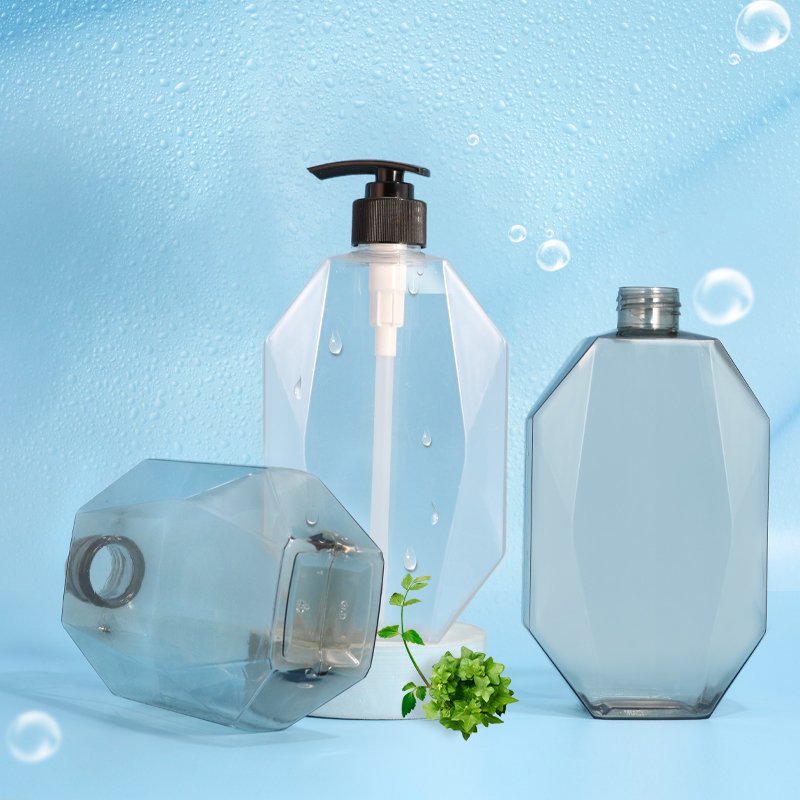
Inspect cosmetic packaging on four fronts before shipment: dimensions, function, appearance and documentation. Use AQL sampling under ISO 2859-1 with critical 0, major 2.5 and minor 4.0. Book the inspection when about 80% of the order is produced and packed, so there is still time to sort or remake.
Most packaging disputes are not about bad factories. They are about undefined standards. When nobody agreed what counts as a major defect, every argument becomes a negotiation. This guide sets out the checks, the test methods and the numbers to write into your purchase order.
Inspection at a glance
- Sampling plan: ISO 2859-1 (equivalent to ANSI/ASQ Z1.4), General Inspection Level II, single sampling, normal severity.
- Typical AQL: critical 0 · major 2.5 · minor 4.0 for cosmetic primary packaging.
- Timing: pre-shipment inspection at roughly 80% production completion, with goods packed and palletised.
- Core test methods: ASTM D2911 dimensions, ASTM D2463 drop impact, ASTM D2659 column crush, ASTM D3198 closure torque.
- Color tolerance: ΔE of 1.5 or below against the approved master sample is a workable production limit.
- ShiJin: 1,000+ open molds, MOQ 5,000 units, 15–25 day production, photo-documented in-line and pre-shipment reports.
Why Does Packaging QC Deserve Its Own Plan?
Packaging fails differently from product. A cream that is slightly off-shade is still sellable. A bottle whose neck is 0.3 mm out of tolerance jams a capping head and stops an entire filling line.
The cost curve is brutal. A defect caught at the mold costs almost nothing. Caught at final inspection it costs a sorting fee. Caught at your filler it costs downtime, scrapped product and a missed launch date.
Three things make packaging QC different:
- It is a mating part. The bottle must fit your closure, your capping torque and your labeller. Tolerances are shared, not independent.
- Volumes are high. At 5,000 units a 2% defect rate is 100 bottles. At 200,000 units it is 4,000.
- Defects are often invisible cold. Stress cracking, panelling and warpage can appear weeks after shipment, which is why standards matter more than eyeballing.
When Should Each Inspection Happen?
Buyers who inspect once, at the end, catch problems too late to fix. Split the plan into four checkpoints.
1. First article inspection (FAI)
Run this on the first shots from the mold, before mass production. Measure every critical dimension, confirm weight and check color against the master sample. Sign off in writing. This is your single most valuable checkpoint.
2. During production inspection (DUPRO)
Carry this out at 20–30% completion. It catches drift in wall thickness, cavity-to-cavity variation and decoration registration while the line can still be corrected.
3. Pre-shipment inspection (PSI)
Book this at about 80% completion, with cartons packed and sealed. Inspectors draw random samples from packed cartons, not from a tray the supplier prepared.
4. Container loading check
Optional but useful for high volumes. It verifies carton counts, pallet stacking and load securing before the doors close.
Which Dimensions Must Be Measured?
Only a handful of dimensions actually stop a line. Focus the inspection on those and give the rest a wider tolerance.
| Dimension | Why it matters | Typical control |
|---|---|---|
| Neck finish (e.g. 24/410) | Capping fit and seal integrity | Go / no-go ring gauges every hour |
| Bottle weight | Proxy for wall thickness and resin use | ±3–5% of the approved sample |
| Minimum wall thickness | Drop and top-load strength | Section and measure; often 0.35–0.5 mm for PET |
| Overflow capacity | Fill volume and headspace | ±2–3% by water weight |
| Height and diameter | Labelling, cartoning, shelf fit | ±0.5–1.0 mm depending on size |
| Perpendicularity / lean | Line stability and shelf appearance | Usually within 1.5–3 mm over bottle height |
| Base clearance (push-up) | Prevents rocking and base stress | Flat on a surface plate, no rock |
ASTM D2911 covers dimensions and tolerances for plastic bottles and is a sensible reference to cite in your specification. Wall thickness is the dimension buyers most often forget - see our guide to the blow molding process for why distribution matters more than the average.
Which Functional Tests Should You Require?
Five tests cover the failure modes that cause real financial damage. Write the method and the pass criterion into the purchase order.
- Leak test. Fill with water, cap to specified torque, invert for 24 hours. Zero leakage. Vacuum or bubble-emission methods such as ASTM D3078 give a faster read on sealed packs.
- Drop test. Filled and capped, dropped from 1.2 m onto concrete, on base, shoulder and side. ASTM D2463 describes the drop impact method for blow-molded containers. Zero cracks or leaks.
- Top load / column crush. ASTM D2659 measures the load a container withstands before buckling. It predicts whether your pallets survive stacking. Specify a target in kilograms based on stack height.
- Application and removal torque. ASTM D3198 covers threaded closures. A 24/410 neck is commonly applied at 12–18 in-lb; removal torque should stay high enough to seal and low enough for a consumer to open.
- Compatibility and shelf life. Not a shipment test, but the sign-off that prevents recalls. See our article on chemical compatibility for the twelve-week protocol.
If a test is not named in the purchase order with a method and a number, it will not be run, and you will not win the argument later.
How Do You Classify Packaging Defects?
Classification is where most disputes start. Agree the three classes before production, with photographs of the boundary cases.
Critical defects (AQL 0)
Anything unsafe or unusable: sharp edges, contamination inside the bottle, foreign objects, wrong material, missing or incorrect regulatory marking.
Major defects (AQL 2.5)
Anything that stops the line or is visible to the end consumer at arm's length: out-of-tolerance neck, leaking, deformed or oval body, cracks, heavy scratches, color out of tolerance, misaligned or smeared printing, wrong quantity in carton.
Minor defects (AQL 4.0)
Cosmetic deviations only visible under close inspection: faint parting-line marks, small gels or specks below an agreed size, slight gloss variation, light surface scuffing that wipes off.
Two rules make this workable. Define a viewing distance - 30 cm under 1,000 lux is a common standard for primary packaging. And define a maximum defect size, for example specks up to 0.5 mm accepted, above 1.0 mm rejected.
How Does AQL Sampling Work in Practice?
AQL, or Acceptable Quality Limit, defines how many samples to draw and how many defects are tolerated. ISO 2859-1 is the international standard; ANSI/ASQ Z1.4 is its US equivalent.
Take a 10,000-unit order at General Inspection Level II, single sampling, normal severity. The plan calls for a sample of 200 units. With AQL 2.5 for major defects, the accept number is 10 and the reject number is 11. For minor defects at AQL 4.0, accept 14 and reject 15. Any critical defect rejects the lot.
Three practical points buyers miss:
- Sample size follows lot size, not order value. A 5,000-unit lot at Level II needs 200 samples; a 50,000-unit lot needs 500.
- Draw from packed cartons at random. Samples handed over by the supplier are not samples.
- Tighten after a failure. Switching to tightened severity for the next two orders is a normal, contractually clean response.
What Belongs in the Inspection Report?
A useful report lets you make a ship / hold decision in five minutes. Require these elements:
- Quantities produced, packed and available for inspection, against the PO.
- Sampling plan applied - lot size, inspection level, sample size, accept and reject numbers.
- Defect table by class with counts and the accept / reject verdict.
- Measured data, not ticks: actual weights, capacities, wall thickness readings and torque values.
- Photographs of every defect found, plus carton markings, drop test results and loading arrangement.
- Master sample comparison photo for color, under controlled lighting.
Building the plan into your first order
Buyers placing an opening order often skip inspection to save cost. That is the wrong order to skip. The first run is where mold behaviour, color and packing method are all being established for the first time.
At ShiJin every order runs first article approval, in-line checks and a photo-documented pre-shipment report as standard, across a library of 1,000+ open molds with MOQ from 5,000 units and 15–25 day production. If you are planning an opening order, our MOQ 5,000 first-order guide shows how to structure quantities so the QC plan still fits the budget.
Frequently Asked Questions
What AQL level should I use for cosmetic bottles?
Critical 0, major 2.5 and minor 4.0 is the widely used standard for cosmetic primary packaging, applied at General Inspection Level II under ISO 2859-1. Tighten major to 1.5 for premium or luxury packaging where surface finish sells the product, and expect a modest price increase in return.
When should a pre-shipment inspection be booked?
Book it when roughly 80 percent of the order is produced and already packed into export cartons. Earlier than that and there is not enough finished stock to sample properly. Later and there is no time to sort, rework or remake before the vessel cut-off.
What are the most common cosmetic bottle defects?
The frequent ones are out-of-tolerance neck finish, uneven wall thickness, body deformation or ovality, color deviation from the master sample, parting line flash, black specks or gels in clear material, and printing misregistration on screen or hot-stamped decoration.
How do I test that bottles will not leak in transit?
Combine three tests. Fill with water, cap to the specified torque and invert for 24 hours. Drop filled units from 1.2 metres onto concrete on base, shoulder and side per ASTM D2463. Then run a top-load test per ASTM D2659 to confirm the pack survives pallet stacking.
Does ShiJin provide inspection reports?
Yes. Every order includes first article approval before mass production and a photo-documented pre-shipment report covering dimensions, weight, capacity, leak, drop and torque results. Third-party inspection by SGS, BV or Intertek can be arranged on request at the buyer's cost.
Matching bottle options for this topic
Real molds from our library in a comparable material and size class — each product page carries the full spec sheet, neck size, MOQ and lead time.
- PE Cosmetic Bottle 200ml — SKU SJE1881-200
- PET Cosmetic Bottle 350ml — SKU SJT0120-350
- PE Cosmetic Bottle 500ml — SKU SJE1669-500
- PE Cosmetic Bottle 750ml — SKU SJE1650-750
Want the QC plan written into your quotation?
Send us your specification and we will return a quotation with the inspection plan, AQL levels and test methods included - not added as an extra later.
Browse Mold Library Request a Quote