
When you import cosmetic bottles into the US or EU, the paperwork often arrives before the product — and it is the paperwork that decides whether your shipment clears customs or sits in a bonded warehouse accruing demurrage.
This guide breaks down the compliance documents that matter for cosmetic packaging, what each market expects, and the specific files a responsible manufacturer like ShiJin should be able to provide. It is written for brand owners and sourcing managers, not regulators.
ShiJin compliance at a glance
- Certified manufacturer: ISO 9001 · FDA · SGS · EU 10/2011 · Food Grade, with GRS for rPET runs on request.
- Full documentation set: material/resin statements, FDA food-contact statements, EU 10/2011 Declarations of Compliance, and SGS migration / heavy-metal test reports.
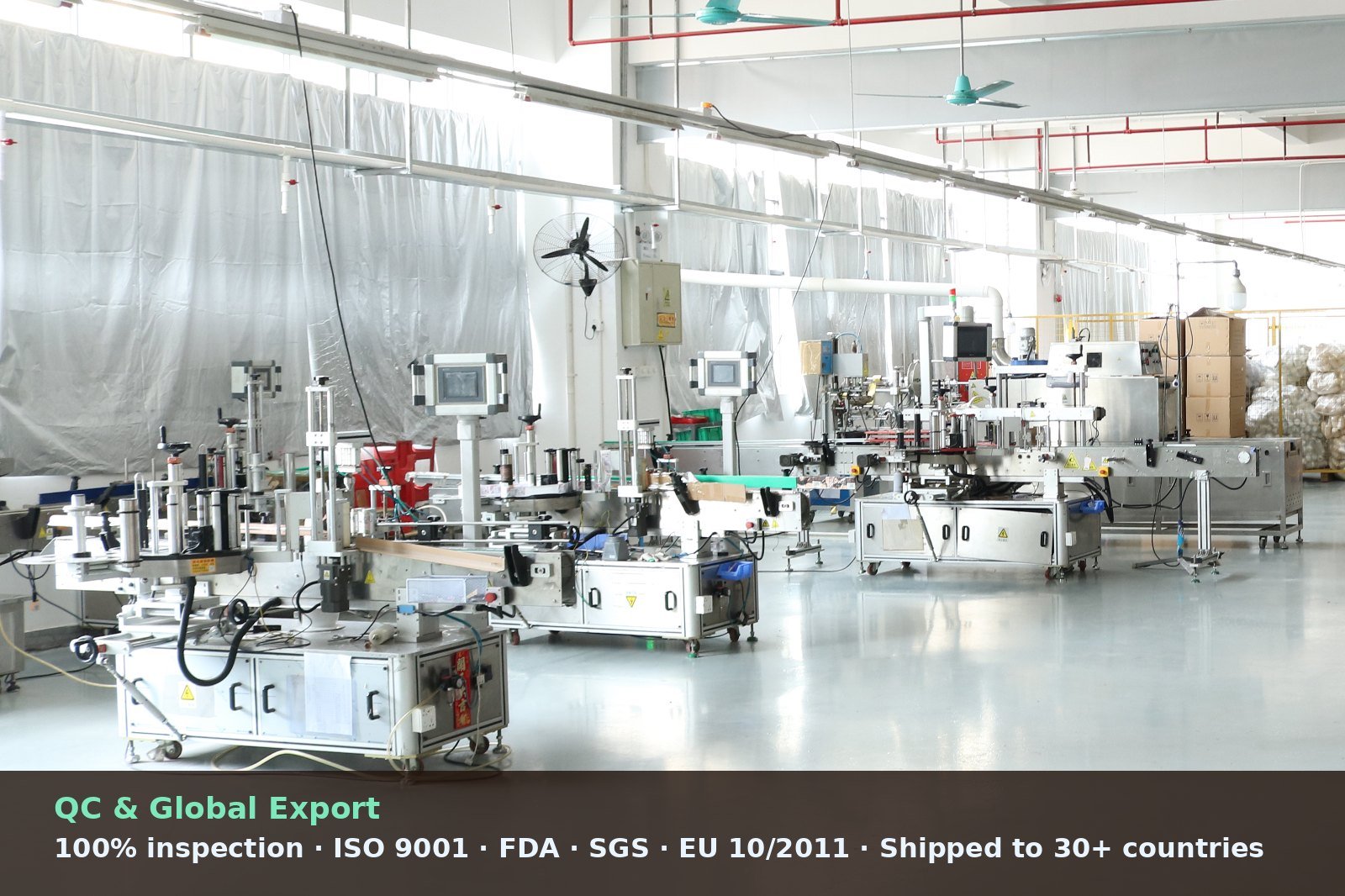
- Batch-traceable: documents are generated against real production batches from a 15,000㎡ plant with 30+ blow-molding lines and in-house QC — not generic templates.
- Global export: bottles shipped to 30+ countries under EXW / FOB / CIF / DAP / DDP, with market-matched compliance packages (US, EU, UK, China GB 4806, Japan, GCC).
- One resin, one document: PET, HDPE and PETG each ship with their own material and compliance files.
Why Compliance Documents Matter
Cosmetic packaging is treated as a food-contact-adjacent article in most markets. Even though the bottle never touches food, regulators care about what could migrate from plastic into a product that ends up on skin or (accidentally) in mouths. Two risks drive the paperwork:
- Customs holds and rejection. Missing or inadequate documentation can stall a shipment at the border.
- Brand liability. If a non-compliant bottle causes a safety issue, the brand — not just the factory — carries the recall and reputational cost.
Good compliance is not a certificate you file away; it is a chain of documents that traces every bottle back to a tested, authorized resin.
US Market — The FDA Framework
In the United States, the Food and Drug Administration regulates both cosmetics and the materials that contact them. Importantly, the FDA does not issue pre-market approval for cosmetic packaging. Instead, bottles fall under food-contact material rules defined in the Code of Federal Regulations (21 CFR) — for example, PET under 21 CFR 177.1630 and HDPE under 21 CFR 177.1520.
What this means in practice:
- The resin and any additives must be authorized for food contact and used within defined limits.
- The supplier should provide a written FDA compliance / food-contact statement confirming the article meets the relevant 21 CFR provisions.
- Cosmetics themselves are covered by the Modernization of Cosmetics Regulation Act (MoCRA, 2022), which raised record-keeping and adverse-event obligations for brands — making clean supplier documentation more valuable than ever.
You do not need an FDA "stamp" on the bottle. You need a credible, written statement from a manufacturer who can trace the resin. ShiJin's PET and HDPE bottles are supplied with material and compliance statements on request.
EU Market — EU 10/2011
The European Union regulates plastic food-contact materials through Regulation (EC) No 1935/2004 (the general framework) and Regulation (EU) 10/2011 (the specific rules for plastics). Key points brand owners should know:
- Overall Migration Limit (OML): no more than 10 mg of substances may migrate per dm² of food-contact surface.
- Positive list: only substances on the authorized list may be used, within defined limits.
- Declaration of Compliance (DoC): the supplier must provide a written declaration confirming the article complies, including the OML and the substances used. It must be traceable to the specific production batch.
- Supporting tests: for higher-risk or sensitive applications, specific migration and heavy-metal testing reports back up the DoC.
A DoC is not optional in the EU — it is the document your importer and QA team will ask for. Treat it as part of the product, not an afterthought.
Other Key Markets
If you sell beyond the US and EU, keep these in view:
- China (GB 4806 series): national food-contact standards with their own positive lists and migration limits.
- Japan: the JHOSPA positive-list framework for synthetic resins.
- Gulf (GCC): GSO standards aligned loosely with international practice.
- UK: post-Brexit, the UK retains a framework similar to EU 10/2011; confirm current UK-specific requirements.
Documents Your Supplier Should Provide
Here is the document set we recommend requesting before you place a production order:
Material / Resin Statement
Confirms the exact polymer (PET, HDPE, PETG), grade and any masterbatch or additive used.
FDA Food-Contact Statement (US)
Written confirmation the article meets the relevant 21 CFR provisions for food-contact plastics.
EU Declaration of Compliance
DoC under (EC) 1935/2004 and (EU) 10/2011, batch-traceable, with OML and substance details.
Migration / Heavy-Metal Test Report
Third-party lab results (e.g., SGS) for overall and specific migration where required.
Quality System Certificates
ISO 9001 and relevant certifications demonstrating consistent, documented manufacturing.
REACH / RoHS Attestation (if applicable)
Confirms absence of restricted substances for the EU and electronics-adjacent requirements.
How ShiJin Supports Compliance
ShiJin operates a documented quality system and holds 8 recognized certifications covering management, food-contact safety and third-party verification. We provide a compliance package — material statements, FDA food-contact statements and EU 10/2011 Declarations of Compliance — matched to your target market.
Our 15,000㎡ facility with 30+ blow-molding lines and in-house QC means documentation is generated against real, traceable production batches — not generic templates.
Common Pitfalls
- Accepting verbal "it's compliant" assurances. If it is not on paper, it does not exist at the border.
- Mixing up food vs. cosmetic standards. Bottles are evaluated under food-contact rules even for cosmetics — know which applies.
- Ignoring regulatory updates. MoCRA and EU revisions change obligations; stale documents create risk.
- Assuming one DoC covers all resins. PET, HDPE and PETG each need their own documentation.
Frequently Asked Questions
Does the FDA approve cosmetic bottles?
The FDA does not issue pre-market approval for cosmetic packaging. Instead, bottles used for cosmetics are treated under food-contact material rules (e.g., 21 CFR for plastics such as PET and HDPE). A reputable supplier provides a written FDA compliance / food-contact statement confirming the resin and any additives meet the relevant 21 CFR provisions.
What is a Declaration of Compliance (EU)?
Under EU Regulation (EC) No 1935/2004 and (EU) 10/2011, a Declaration of Compliance (DoC) is a written document from the material or article supplier stating that the plastic article complies with the regulation, including the overall migration limit and the positive list of authorized substances. It must be traceable to the specific batch or production run.
Do I need compliance documents for every shipment?
You should hold valid compliance documents for each material and formulation you import. For recurring shipments of the same article, a current DoC and material statement are typically sufficient, but customs or your brand's QA may request batch-specific test reports. Keep documents updated when resin or masterbatch changes.
Can ShiJin provide EU 10/2011 and FDA documentation?
Yes. ShiJin holds ISO 9001, FDA and SGS certifications and can supply material statements, FDA food-contact statements and EU 10/2011 Declarations of Compliance to support your import and QA files. Ask our sales team for the compliance package matching your target market.
Do PET, HDPE and PETG each need separate compliance files?
Yes. PET, HDPE and PETG are different polymers with different authorized additives and migration behaviour, so each resin must ship with its own material statement and Declaration of Compliance. Never assume one DoC covers all three — request a document set per resin and per colour/masterbatch.
What compliance documents do I need to import bottles into the US?
For the US you need a written FDA food-contact statement confirming the resin and additives meet the relevant 21 CFR provisions (e.g., PET under 177.1630, HDPE under 177.1520), plus an ISO 9001 certificate and, where relevant, migration test reports. Cosmetics themselves fall under MoCRA (2022), which raises your own record-keeping duties — so clean supplier files matter more than ever.
What is the EU Overall Migration Limit (OML)?
Under EU 10/2011, the Overall Migration Limit is 10 mg of substances per dm² of food-contact surface. The supplier's Declaration of Compliance must confirm the article meets this limit and list the authorized substances used; for higher-risk applications, specific migration and heavy-metal test reports back the DoC.
Does ShiJin ship to markets beyond the US and EU?
Yes. ShiJin exports bottles to 30+ countries and can prepare market-matched compliance packages — including China (GB 4806 series), Japan (JHOSPA positive list), the UK (post-Brexit framework similar to EU 10/2011) and the Gulf (GCC/GSO standards). Tell us your target market and we assemble the right document set.
Matching bottle options for this topic
Real molds from our library in a comparable material and size class — each product page carries the full spec sheet, neck size, MOQ and lead time.
- PET Cosmetic Bottle 200ml — SKU SJT0424-200
- PET Cosmetic Bottle 260ml — SKU SJT0205-260
- PE Cosmetic Bottle 500ml — SKU SJE0095-500
- PE Cosmetic Bottle 730ml — SKU SJE1812-730
Need a compliance-ready bottle supplier?
Request our documentation package for your target market and get matched bottles with traceable, batch-specific compliance files.
📄 Request Docs