
Capacity and shape are not just styling choices — they signal how the product is used, what it costs to ship, and whether it fits in a bathroom or a carry-on. Get them wrong and even a great formula feels off.
This guide maps common cosmetic and daily-chemical products to the bottle volumes and forms that suit them, then shows how ShiJin's stock mould range covers each one.
ShiJin stock mould range — at a glance
- 600+ stock moulds covering below 100 ml up to above 1000 ml in PET, HDPE and PETG.
- Capacity bands: below 100 · 100–200 · 201–300 · 301–400 · 401–500 · 501–750 · 751–1000 · above 1000 ml.
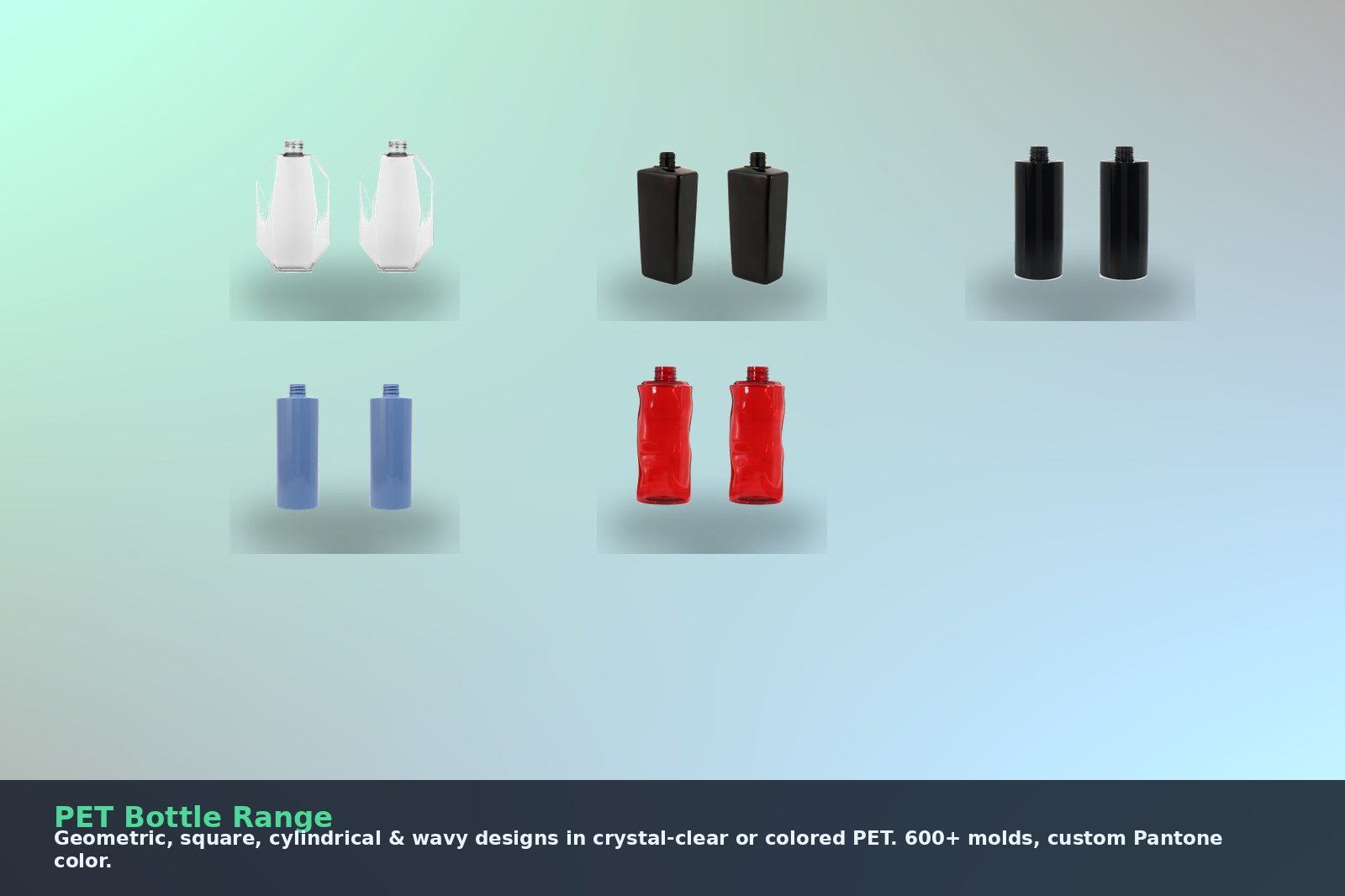
- Shapes: cylindrical, slim/flat, round, Boston round, cosmo and custom — across all three resins.
- MOQ 5,000 pcs per SKU (one size + closure + color); stock moulds avoid custom tooling.
- Export-ready: 30+ countries, ISO 9001 · FDA · SGS · EU 10/2011 certified.
Capacity & Shape Drive Usage and Cost
Three forces pull on the size decision:
- Usage ritual — a serum is dabbed; a shampoo is pumped. Volume follows ritual.
- Price perception — 30 ml reads "premium treatment"; 500 ml reads "value daily."
- Logistics — air freight punishes large, mostly-air bottles; right-sizing cuts freight materially.
Serums & Facial Oils (15–30 ml)
The category standard is a 30 ml bottle (15 ml for travel/entry), almost always with a dropper closure, in clear or amber PET/PETG. Small, weighted and palm-friendly — it signals concentrated, high-value formula.
Toners & Essences (100–200 ml)
100–200 ml with a fine-mist sprayer is the norm. Clear PET shows the liquid; a slim cosmo shape feels modern. 200 ml is the most common single size for daily toners.
Lotions & Creams (200–400 ml)
Body and hand lotions sit at 200–400 ml with a lotion pump or wide-mouth jar for thicker creams. HDPE (opaque) or PET; pumps need a stable base, so a rounded or cylindrical body works best.
Shampoo & Body Wash (300–750 ml)
Retail shampoos and body washes run 300–750 ml (500 ml most common, 750 ml–1 L for family), with a pump or flip cap, usually in HDPE for chemical resistance. Larger formats favour a sturdy cylindrical or squared body for shelf stability.
Facial Mists & Setting Sprays (50–150 ml)
Mists are 50–150 ml with a fine-mist or high-output sprayer. Light, often carried in a bag, so a slim or rounded small bottle in PET/PETG is ideal. Travel mists stay at or below 100 ml.
Capacity-by-Product Table
| Product | Typical capacity | Closure | Common shape | Resin |
|---|---|---|---|---|
| Serum / oil | 15–30 ml | Dropper | Slim / round | PET, PETG |
| Toner / essence | 100–200 ml | Mist sprayer | Cosmo / slim | PET |
| Lotion | 200–400 ml | Lotion pump | Cylindrical | PET, HDPE |
| Cream (jar) | 50–200 ml | Screw cap | Wide-mouth jar | PET, HDPE |
| Shampoo / body | 300–750 ml | Pump / flip | Cylindrical / sq. | HDPE, PET |
| Facial mist | 50–150 ml | Mist sprayer | Slim / round | PET, PETG |
| Travel / sample | 15–100 ml | Cap / dropper | Slim / mini | PET, PETG |
Note: capacities are category conventions, not rules. Your formula viscosity, fill line and market can shift the ideal size — ShiJin will recommend based on your actual product.
Shape & Ergonomics Considerations
- Cylindrical: cheapest to mould, most stable on shelf, best for pumps (even base).
- Slim / flat: modern, pocket- and travel-friendly, great for serums and mists.
- Round / Boston round: classic premium look, good hand-feel for oils and treatments.
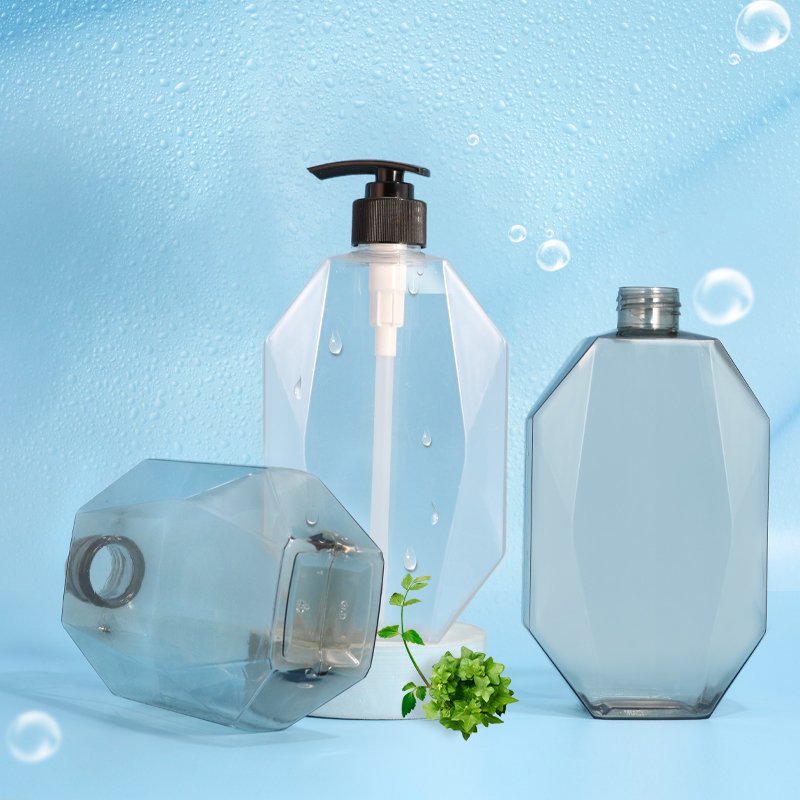
- Squared: maximizes shelf density and labels; slightly higher tooling cost.
- Custom: see our private-mold service for a bespoke shape exclusive to your brand.
"Most brands over-size their first bottle. We usually recommend starting one step smaller — it lowers freight, looks premium, and customers finish it before the formula degrades." — ShiJin packaging team
Frequently Asked Questions
What size bottle should I use for a serum?
Serums and facial oils are almost always 10–30 ml, with 30 ml the most common premium size and 15 ml a frequent travel or entry size. They pair with a dropper closure. A 30 ml serum in PET or PETG with a glass dropper is the category standard and what most customers expect on the shelf.
How do I choose between a pump and a dropper?
Choose a dropper for low-dose, controlled application (serums, oils, spot treatments). Choose a pump for higher-viscosity, higher-volume products where a measured squirt is wanted (lotion, shampoo, hand soap). If the product is watery and used as a mist, choose a sprayer instead. The closure guide covers this in detail.
What capacity is standard for shampoo and body wash?
Retail shampoo and body wash are typically 300–750 ml, with 500 ml the most common single size and 750 ml–1 L for family / value formats. They use a lotion pump or flip cap and are usually HDPE (opaque, chemical-resistant) or PET. Hotel/travel sizes are 30–100 ml.
Can the same mould produce multiple capacities?
Generally no — each capacity is its own mould. However, a product family often shares the same neck finish and closure across sizes, so you can scale a range (e.g. 30 / 50 / 100 ml) with one closure type. ShiJin's 600+ stock moulds let you build a size range without tooling each one from scratch.
Which shape is best for travel or airline carry-on?
For carry-on compliance, keep the liquid at or below 100 ml (the 3-1-1 rule) and choose a slim, flat or round small bottle (15–100 ml) with a secure cap or dropper. ShiJin stocks 15–100 ml moulds in PET/PETG/HDPE that suit travel and sample formats.
How does capacity affect shipping cost?
Air freight is charged by the greater of actual or volumetric weight, and larger bottles are mostly air — so a 1 L bottle costs far more per unit to ship than a 100 ml one. For export, right-sizing the bottle (and using lighter PET vs thick HDPE where possible) directly lowers freight. Sea freight favours larger volumes and is less sensitive to per-bottle size.
Do you have stock moulds for small (15 ml) bottles?
Yes. ShiJin's 600+ stock moulds include the below-100 ml band — 15, 20, 30, 50, 60 and 100 ml formats in PET, PETG and HDPE — covering serum, essence, sample and travel needs. Exact mould numbers are listed in the per-capacity PET and PE/HDPE catalogues.
What is the MOQ per capacity or shape?
MOQ is 5,000 pcs per SKU (one capacity + closure + color combination). Because each capacity is a separate mould, a multi-size range means a separate MOQ per size; using stock moulds avoids custom tooling. Contact sales with your target sizes for a quote.
Matching bottle options for this topic
Real molds from our library in a comparable material and size class — each product page carries the full spec sheet, neck size, MOQ and lead time.
- PET Cosmetic Bottle 30ml — SKU SJT0246-30
- PE Cosmetic Bottle 250ml — SKU SJE1656-250
- PETG Cosmetic Bottle 400ml — SKU SJE1717-400
- PET Cosmetic Bottle 30ml — SKU SJT0347-814
Not sure which size fits your product?
Tell us your product type and usage — we'll recommend the right capacity, shape and closure, and send free samples.
🧪 Get Free Samples