
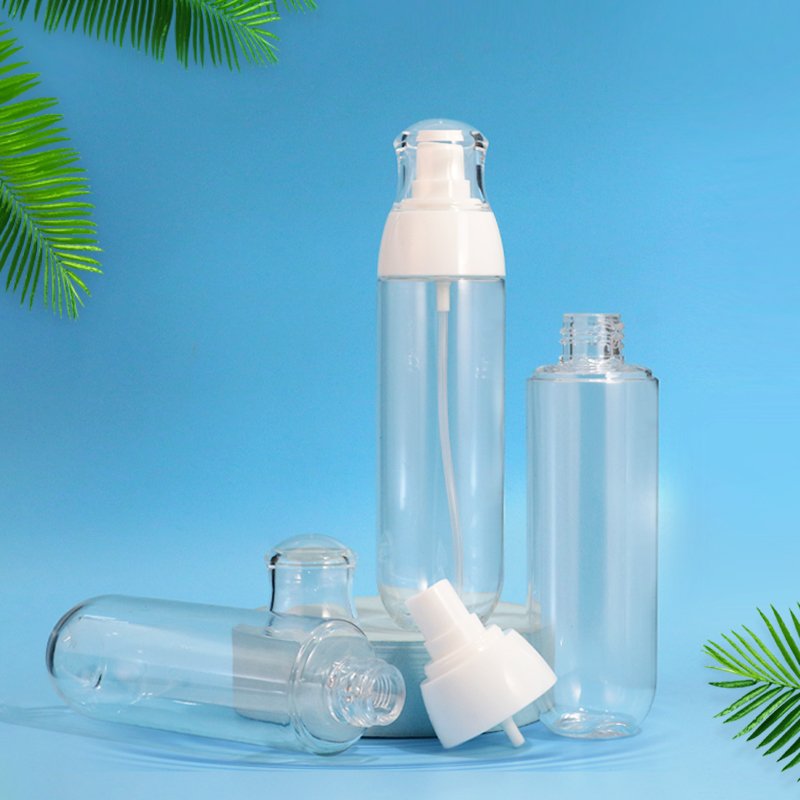
A 100 ml bottle rarely holds exactly 100 ml of product. Moulded capacity is quoted two ways: brimful volume is the maximum the bottle can take to the very top, while fill volume is the working level you should fill to. The gap between them is headspace, and quoting the wrong one is how a line overfills, foams, or fails a net-content check.
Capacity tolerance matters at three moments: when the mould is cut, when the filler is set, and when a regulator weighs the finished unit. Each uses a different number, and confusing them causes leaks, under-fill fines, or bottles that look empty. This guide separates brimful from fill volume, gives typical blow-mould tolerances, and shows how to set a fill line that survives production and inspection.
Capacity tolerance at a glance
- Brimful: the maximum volume to the very top; the number mould makers quote, not your fill target.
- Fill volume: the working level you fill to, typically 5 to 15 percent below brimful for headspace.
- Mould tolerance: blow-moulded bottles commonly hold plus or minus 1 to 3 percent of nominal capacity.
- ShiJin: 1,000+ open molds, MOQ 5,000 units, 15-25 day production, capacities quoted brimful and fill.
Brimful vs Fill Volume: What Is the Difference?
Brimful capacity is the volume the bottle holds when filled to the very top, sometimes with a slight meniscus. It is the number a mould maker quotes, because it describes the tool, not your process. Fill volume is the level you actually fill to on the line.
The two are not close. A bottle quoted at 100 ml brimful is designed to be filled to perhaps 90 ml, because the last 10 ml is headspace the process needs. If you set the filler to 100 ml you will overflow, foam and fail to cap cleanly.
Always ask the supplier for both numbers on the same bottle, in the same unit, measured the same way. Our capacity and shape guide shows how nominal, brimful and fill volumes are used at different stages of a project.
What Tolerance Does a Moulded Bottle Hold?
A blow-moulded bottle does not hold one exact volume; it holds a range. Typical commercial tolerance is about plus or minus 1 to 3 percent of nominal capacity, driven by wall thickness variation, resin lot and process drift. Injection-moulded jars are usually tighter.
The range widens with bottle size and with how the mould is run. A thin-walled large bottle drifts more than a small thick jar, and a worn mould drifts more than a fresh one, which is why our wall thickness guide ties capacity stability to wall control.
Design the fill to sit inside that range with margin. If you fill to within 1 percent of brimful on a bottle that can vary 3 percent, some units will overflow and some will look under-filled, so plan the target below the worst-case brimful, not at the nominal.
How Much Headspace Should You Leave?
Headspace is the air gap above the fill line, and you need it for four reasons: thermal expansion, the dip tube, foam on filling, and a clean cap. A thin or missing gap is the usual cause of leaks and ballooning in warm storage.
A practical rule is 5 to 15 percent of nominal capacity for most lotions and serums, more for products that foam or that ship hot. Low-viscosity toners need enough room that the liquid does not reach the closure threads during transit slosh.
Mark the fill line on the bottle drawing, not just in the spec sheet, because the line is what the operator and the inspector see. Our sample approval guide explains why a signed sample should record the agreed fill line and part weight.
How Do You Set the Filler to the Right Volume?
Set the filler to fill volume, not brimful, and verify it with the real product, not water, because viscosity and foam change the delivered volume. Run a short batch, weigh ten filled units, and adjust until the average sits at target with the spread inside your tolerance.
Use an average-fill system where the law allows it. Many net-content rules permit the average of a batch to meet the declared volume as long as no individual unit falls below a lower tolerance, which is more efficient than setting every unit to the maximum. Confirm the rule that applies to your market.
Control the variables that move volume: fill temperature, line speed and bottle variation. A filler tuned on Monday can drift by Friday if resin or ambient temperature shifts, so re-check periodically. The checks that carry into production are listed in our pre-shipment QC guide.
How Do You Verify Net Content?
Net content is usually verified by weight, not by reading the level. Weigh the empty bottle, weigh the filled unit, and the difference is product mass, which converts to volume using the formula density. This catches both under-fill and over-fill, which both cost money.
Sample on a plan, not by eye. Draw units across a production run, not from the start, and plot the average and the spread against the declared volume and the legal minimum. A control chart turns a one-off check into an early warning before a whole batch drifts out of spec.
At ShiJin we quote both brimful and fill volume on 1,000+ open molds, mark the agreed fill line on the drawing, and seal a sample that records part weight and fill level. MOQ is 5,000 units with 15-25 day production. Tell us your declared volume and formula density and we will size the bottle so your line fills it cleanly every time.
Frequently Asked Questions
What is brimful capacity?
Brimful capacity is the volume a bottle holds when filled to the very top, sometimes with a slight meniscus. It is the number a mould maker quotes because it describes the tool. It is the maximum the bottle can take, not the level you should fill to on the production line.
What tolerance should I expect on a moulded bottle?
A blow-moulded bottle typically holds about plus or minus 1 to 3 percent of nominal capacity, driven by wall thickness, resin lot and process drift. Injection-moulded jars are usually tighter. Set your fill target inside that range with margin rather than at the nominal.
Why leave headspace above the fill line?
Headspace gives room for thermal expansion, the dip tube, foam during filling and a clean cap. Too little causes leaks and ballooning in warm storage; thin or missing headspace is the usual cause of transit leaks. A practical rule is 5 to 15 percent of nominal capacity.
Does capacity change with resin or wall thickness?
Yes. Wall thickness variation moves internal volume, so a bottle run with thinner walls holds more than one run thicker, and different resins shrink differently out of the mould. That is why capacity stability tracks wall control and why the mould and process must be held to spec.
How is net content checked for compliance?
Net content is usually verified by weight: weigh the empty bottle and the filled unit, take the difference as product mass, and convert to volume using the formula density. Sample across the run and check the batch average and spread against the declared volume and the legal minimum for your market.
Matching bottle options for this topic
Real molds from our library in a comparable material and size class — each product page carries the full spec sheet, neck size, MOQ and lead time.
- PET Cosmetic Bottle 60ml — SKU SJT0145-60
- PE Cosmetic Bottle 300ml — SKU SJE1768-300
- PET Cosmetic Bottle 500ml — SKU SJT0357-500
- PET Cosmetic Bottle 980ml — SKU SJT0202-980
Sizing the bottle so your line fills it cleanly?
Tell us your declared volume and formula density. We will quote brimful and fill volume on 1,000+ open molds, mark the agreed fill line on the drawing, and seal a sample that records part weight and fill level for your 5,000-unit order with 15-25 day production.
Browse Mold Library Request a Quote