
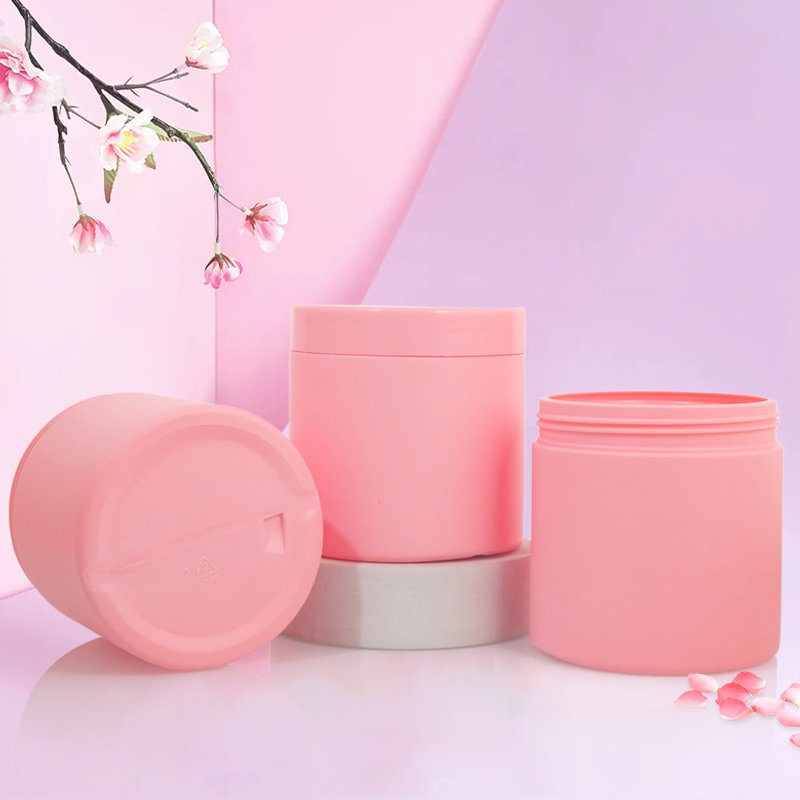
A cosmetic jar can be sealed five ways: a loose inner disc, a lined cap, an induction foil seal, a gasket cap or an airless piston jar. Inner discs are cheapest and weakest. Induction foil gives the best tamper evidence and transit leak control. Airless jars protect sensitive actives but cost the most. Choose by shipping method and formula sensitivity, not by price alone.
Jars are the least forgiving cosmetic format. The opening is wide, the customer dips a finger in, and the lid has to reseal every day for months. Most jar complaints are not about the jar at all, they are about the seal that was specified as an afterthought. This guide compares the five options on the factors that actually decide performance.
Jar sealing at a glance
- Standard jar necks: 48/400, 58/400, 70/400 and 89/400 are the common cosmetic jar finishes.
- Best tamper evidence: induction foil seal — visible, single use, and it must be broken to reach the product.
- Best for sensitive actives: airless piston jar — the product never contacts the air above it.
- Cost order, low to high: loose inner disc < cap liner < induction foil < gasket cap < airless jar.
- ShiJin: 1,000+ open molds including jar formats, MOQ 5,000 units, 15–25 day production.
Why Do Cosmetic Jars Leak?
A jar leaks at the interface between the lid and the jar mouth, called the sealing land. Three things break that interface, and they usually act together.
The first is application torque. Cap it too loosely and the seal never compresses. Cap it too tightly and the thread deforms, or the customer cannot open it. Every jar and closure pair has a torque window, and it should be measured, not judged by hand.
The second is pressure change. Air freight and unpressurised cargo holds expose a filled jar to lower external pressure, so trapped air pushes outward against the seal. A thick cream may hold. A thin lotion in a jar will find the weak point.
The third is the sealing land itself. If the jar mouth has flow lines, a parting-line step or a slight ovality from cooling, the seal only contacts part of the circumference. That defect is invisible to the eye and obvious in a leak test.
What Are the Five Jar Sealing Systems?
Each system solves a different problem. Read the table by your priority column, not by the cost column.
| System | How it seals | Tamper evidence | Relative cost |
|---|---|---|---|
| Loose inner disc | A separate disc rests in the jar mouth under the lid | Weak, it can be replaced | Lowest |
| Lined cap | A foam or pressure-sensitive liner inside the cap compresses on the land | Moderate | Low |
| Induction foil seal | Aluminium foil is heat-bonded to the jar land | Strong, single use | Medium |
| Gasket or O-ring cap | An elastomer ring compresses and re-seals repeatedly | Moderate | Medium-high |
| Airless piston jar | A piston rises behind the product; a pump or wiper controls the opening | Strong with a shrink band | Highest |
Two combinations are common in practice. An induction foil seal plus a lined cap gives transit protection from the foil and daily reseal from the liner after the customer removes it. A gasket cap plus a shrink band gives repeat sealing with a visible first-open cue.
Double-wall jars sit outside this list because they change the look, not the seal. The inner jar still needs one of the five systems above.
Which Seal Survives E-Commerce Shipping?
E-commerce is harsher than retail distribution. A single jar travels alone in a light carton, gets handled by several couriers, and may fly. A leak becomes a refund and a review, not just a warehouse write-off.
For direct-to-consumer shipping, an induction foil seal is the practical answer. The foil is bonded to the jar land, so it holds against internal pressure and it cannot be reclosed. Customers also read an intact foil as a hygiene signal, which matters for a format they will put fingers into.
A loose inner disc is the weakest choice here. It is not bonded, it shifts in transit, and it offers no genuine tamper evidence because it can be lifted and replaced. It works for jars that ship in bulk to a filler or a spa, not to a consumer doorstep.
Airless jars perform well in shipping because the product sits in a closed chamber, but the cost only makes sense when the formula justifies it. If your unit price cannot carry the component, use induction foil and spend the difference on the outer carton.
How Does the Seal Affect Formula Stability?
A jar has a large headspace and the customer opens it daily. Every open exchanges the air above the product, which is why the seal choice drives shelf life for oxygen-sensitive formulas.
Standard jars with a disc or lined cap are fine for emulsions, balms and body butters where the actives are stable. They are a poor match for ascorbic acid, retinol and other oxidation-sensitive ingredients, because no daily-open jar keeps air away for long.
Airless piston jars solve that directly. The piston follows the product upward, so there is no air pocket above the formula and no chance to contaminate the remaining product with fingers. That is why serums and active treatments migrate to airless formats. Our airless versus regular pumps comparison covers the mechanism in detail.
Material choice works alongside the seal. Check that the jar resin, the liner material and any gasket are all compatible with your formula, especially with high oil or essential oil content. Our chemical compatibility guide explains how to run that test before you commit tooling.
What Does Each Option Need on the Filling Line?
The seal you choose is also an equipment decision. Buyers sometimes approve an induction foil seal and then discover the filler has no induction sealer.
An inner disc and a lined cap need nothing beyond a capper with controlled torque. Both are the low-friction options for a contract filler with basic equipment.
An induction foil seal needs foil-lined caps and an induction sealing head after the capper, plus a bond-strength check during production. A gasket cap needs a tighter torque window, because too little compression leaks and too much distorts the ring.
An airless jar changes the fill method itself. The product is usually filled from the top and the piston is inserted from the base, or filled from the base into the chamber. Confirm the filling sequence with your filler before you order components, since it also affects how much product remains unusable at the end.
How Do You Specify a Jar Seal That Passes?
Six lines in the specification turn the seal from a hope into a testable requirement.
- Neck finish. State the standard finish, for example 58/400, and the matching closure part number.
- Seal system. Name it explicitly: loose disc, lined cap with liner material, induction foil, gasket, or airless.
- Application and removal torque. Give a target window; ASTM D3198 describes the measurement method for threaded closures.
- Leak test. Filled jars, inverted for a fixed period, plus a reduced-pressure test if the goods will fly.
- Sealing land condition. No flow lines, steps or ovality on the land; state a flatness expectation.
- Sampling plan. ISO 2859-1 with an agreed AQL, so pass or fail is a rule and not an argument.
Test with your real formula, not with water. Viscosity, oil content and fill temperature all change how a seal behaves, and water passes tests that a thin lotion fails.
ShiJin supplies jar formats from a library of 1,000+ open molds with MOQ from 5,000 units and 15–25 day production. Tell us your formula, fill volume and shipping method and we will recommend a sealing system with the closure and liner spelled out.
Frequently Asked Questions
What is the best way to seal a cosmetic cream jar?
For consumer shipping, an induction foil seal bonded to the jar land is the strongest practical option. It resists pressure changes in transit, cannot be reclosed, and reads as a hygiene signal. Pair it with a lined cap so the jar still reseals after the customer removes the foil.
Is a loose inner disc enough to stop a jar from leaking?
Usually not for direct-to-consumer shipping. The disc is not bonded to the jar, so it can shift in transit and it can be lifted and replaced, which means it provides no real tamper evidence. Inner discs suit thick balms and bulk shipments to fillers or spas rather than single parcels.
What jar neck sizes are standard for cosmetic jars?
The common cosmetic jar finishes are 48/400, 58/400, 70/400 and 89/400. Always specify the finish in that notation rather than a diameter in millimetres, and confirm the matching closure part number, because a mismatch is only discovered at filling.
When is an airless jar worth the extra cost?
When the formula is oxidation sensitive or the product is high value. Ascorbic acid, retinol and peptide treatments benefit because the piston removes the air pocket above the product and stops finger contact. For stable emulsions, balms and body butters a standard jar with foil and a lined cap is enough.
How should a cream jar seal be leak tested before shipment?
Fill jars with the real formula, cap them at the agreed torque, then invert them for a fixed period and inspect the land. Add a reduced-pressure test if the goods will travel by air. Use ISO 2859-1 sampling with an agreed AQL so the pass or fail decision follows a rule.
Matching bottle options for this topic
Real molds from our library in a comparable material and size class — each product page carries the full spec sheet, neck size, MOQ and lead time.
- PET Cosmetic Bottle 70ml — SKU SJT0204-70
- PET Cosmetic Bottle 250ml — SKU SJT0383-250
- PET Cosmetic Bottle 350ml — SKU SJT0307-350
- PET Cosmetic Bottle 420ml — SKU SJT0330-420
Not sure which jar seal your formula needs?
Send us the formula type, fill volume and shipping method. We will recommend a jar, closure and sealing system from our 1,000+ open molds, with leak test criteria included.
Browse Mold Library Request a Quote