
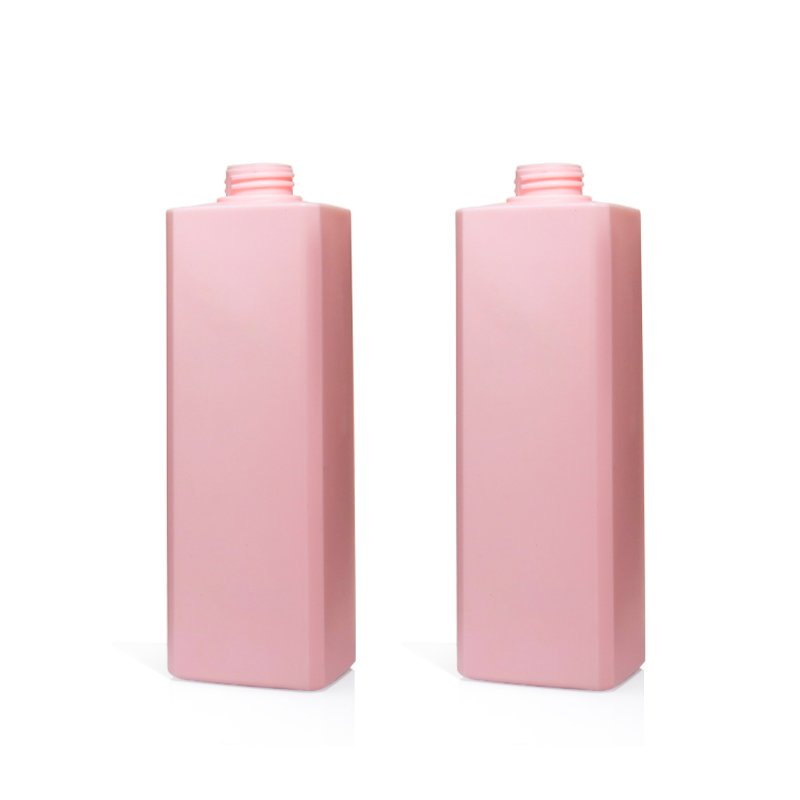
A cosmetic pump delivers a fixed dose per stroke, typically 1 to 4 ml. That output volume is set by the pump design and shifted by your formula's viscosity. Name the target dose and the neck finish on the purchase order so every bottle dispenses the same amount.
Buyers compare bottle shape and resin, then pick a pump as an afterthought. That is backwards. The pump decides how much product leaves the bottle on each press, and a wrong dose ruins the experience: too much wastes formula and looks cheap, too little frustrates the user and reads as defective. The number that governs this is the pump output volume, the millilitres dispensed per full stroke. It is a measurable specification, not a feel, and you can state it on the order. This guide explains what output volume means, the typical ranges by product type, why viscosity moves the number, how consistent a good pump stays, how the neck finish locks the fit, and what to write on the PO so the dispenser matches the formula.
Pump dose at a glance
- Output volume: The millilitres dispensed per full stroke, typically 1 to 4 ml for a cosmetic hand pump. A standard lotion pump lands near 2 ml; a serum or eye-care pump runs lower; a hair or body pump can run higher.
- Viscosity shifts it: A thick cream needs more force to move than a thin toner, so the same pump delivers a different volume for a different formula. Match the pump to the viscosity, not just to the bottle.
- Output tolerance: A consistent pump holds its dose within roughly 0.1 to 0.2 ml across a production lot. Widening spread means the line is drifting, which is what a buyer should check at goods-in.
- Neck finish locks the fit: The pump screws onto a standard neck such as 24/410, 24/415 or 28/410. The first number is the neck diameter in mm; the second is the thread style. Match both or the pump will not seat.
- ShiJin: 1,000+ open molds in PET, HDPE and PETG; MOQ 5,000 units; 15-25 day lead time. We pair each pump to the bottle neck and supply the target output volume, viscosity range and output tolerance so your incoming check has a number to measure against.
What Pump Output Volume Means
Pump output volume is the amount of product a pump releases on one full actuation, measured in millilitres. A user presses the head, the pump draws from the bottle and pushes out a set dose. The dose is built into the pump's internal chamber and spring, so it stays roughly the same press after press, which is why a pump feels predictable in hand.
This number is the bridge between the bottle and the experience. It sets how many uses a filled bottle yields, how the formula spreads, and how premium the pack feels. A 2 ml lotion dose from a 200 ml bottle gives about 100 uses; halve the dose and the same bottle feels like it lasts twice as long. That relationship is why the dose belongs in the spec, not in the guess.
Output volume is independent of the bottle capacity. A 30 ml serum and a 500 ml lotion can share the same 2 ml pump, or they can carry different pumps tuned to the use case. The pump is a component you choose for the formula and the gesture, not for the bottle size. Our airless versus regular pump guide covers when a different pump type is the right call.
Typical Dose Ranges by Product Type
Most hand pumps sit in the 1 to 4 ml band, and the right point depends on how the product is used. A body or hair pump often runs 3 to 4 ml because the user wants a generous handful. A face lotion commonly lands near 2 ml, enough to cover the face without waste.
Lower-viscosity or treatment products run smaller. A serum or eye-care pump frequently delivers 0.5 to 1 ml, because the user wants a controlled drop, not a splash. A toner pump sits around 1 to 2 ml, balancing coverage with restraint. These are starting points, not rules; the formula and the brand gesture decide the final number.
The practical move is to pick the dose from the use moment, then find the pump that holds it. If you already know the bottle size and the target number of uses, divide the fill by the uses to get the dose, then confirm a pump exists at that output. Our spray systems guide covers the mist alternative when the product should atomise rather than stream.
Why Formula Viscosity Shifts the Dose
The same pump dispenses a different volume for a different formula, because viscosity is the resistance the pump works against. A thin toner flows easily and fills the chamber fully; a thick cream resists and can leave the chamber partly filled, so the delivered dose drops even though the pump did not change.
This is why a pump qualified on water can under-dose a gel, and why a pump tuned for a cream can over-dose a fluid. The fix is to qualify the pump against the real formula, not a stand-in liquid. If the viscosity changes during the product's life, or between batches, the dose moves with it, so lock the formula before you lock the pump.
Two design levers compensate: the orifice size and the pre-compression in the pump. A wider orifice passes thicker product; more pre-compression gives a steadier stream. Ask the supplier which viscosity range the pump was built for, because that range, not the catalogue photo, predicts the real dose. The closure liner guide explains the seal parts that sit behind the dose.
Output Tolerance and Lot Consistency
A good pump holds its dose within a narrow band across a lot, typically about 0.1 to 0.2 ml around the target. That spread is what makes the pack feel identical from the first bottle to the last. A pump that drifts outside that band is not broken; it is out of control, and the user notices the inconsistency before the lab does.
Consistency also depends on the actuation itself. The first few presses often prime the pump and read differently from a settled stroke, so the dose you quote should be the steady-state output after priming, not the first press. A supplier that reports only the first stroke is hiding the number that matters.
Check it at goods-in the same way you check torque: measure the output of a sample from each lot, average it, and compare the spread to the quoted tolerance. A wide spread means the pump line is drifting even if the average looks fine. Our incoming-inspection guide lays out a routine you can copy for the pump as well as the bottle.
Neck Finish and Pump Compatibility
The pump screws onto the bottle neck, and the neck finish decides whether it fits. The code reads as diameter over thread style: 24/410 means a 24 mm neck with a 410 thread, 28/410 a 28 mm neck with the same thread family. The diameter must match the bottle; the thread style must match the closure, or the pump will not seat squarely and will leak.
A 415 thread is taller than a 410, so a 24/415 pump sits higher on the neck than a 24/410 even though both are 24 mm. Forcing a 410 closure onto a 415 neck cross-threads the seal, the exact failure mode that defeats the dose and the leak path at once. The neck is part of the pump specification, not a separate decision.
Because the neck is moulded into the bottle, choose the pump and the bottle together, then verify both in the sample. Our neck finish guide explains the 24/410 and 24/415 codes and why the match decides the fit, the seal and the dose you can trust.
What to Specify on the Purchase Order
The PO is where the dose becomes real. State the target output volume in ml per stroke, the formula viscosity range the pump must handle, and the neck finish the pump screws onto. Add the acceptable output tolerance and the prime-stroke note, so the factory tunes and checks the pump against a number instead of a habit.
Ask for a per-lot output report: the measured average dose and the spread, taken after priming, on the actual formula if possible. Without that line, the supplier optimises for speed and you inherit the drift. Keep the pump, neck and formula fixed in the spec, because changing any one silently moves the dose.
Pair the dose clause with the leak and torque checks so the three cross-validate each other. At ShiJin we mould PET, HDPE and PETG from 1,000+ open molds with MOQ 5,000 units and 15-25 day lead times, and we pair each pump to the bottle neck and supply the target output volume, viscosity range and output tolerance so your incoming QC starts from evidence, not feel.
Frequently Asked Questions
What is pump output volume?
It is the millilitres of product a pump dispenses on one full stroke, typically 1 to 4 ml for a cosmetic hand pump. The number is built into the pump's chamber and spring, so a settled pump delivers a consistent dose press after press.
What dose do I need for lotion, serum or toner?
A body or hair pump often runs 3 to 4 ml, a face lotion near 2 ml, a toner about 1 to 2 ml, and a serum or eye-care pump 0.5 to 1 ml. Pick the dose from the use moment, then choose a pump that holds it.
Does formula viscosity change the output?
Yes. The same pump delivers less of a thick cream than of a thin toner, because viscosity is the resistance the pump works against. Qualify the pump against the real formula, and ask which viscosity range it was built for.
How consistent is the dose across a lot?
A good pump holds its dose within about 0.1 to 0.2 ml of the target across a lot. Measure the steady-state output after priming on a sample from each lot, and flag a wide spread as a drifting line.
What pump specs go on the purchase order?
State the target output volume in ml per stroke, the formula viscosity range, the neck finish (for example 24/410), the acceptable output tolerance, and a per-lot output report taken after priming on the actual formula if possible.
Matching bottle options for this topic
Real molds from our library in a comparable material and size class — each product page carries the full spec sheet, neck size, MOQ and lead time.
- PET Cosmetic Bottle 80ml — SKU SJT0522-80
- PET Cosmetic Bottle 300ml — SKU SJT0033-300
- PET Cosmetic Bottle 400ml — SKU SJT0511-400
- PET Cosmetic Bottle 500ml — SKU SJT0158-500
Need a pump that doses the same every time?
Tell us the formula, the viscosity and the neck finish. We mould PET, HDPE and PETG from our 1,000+ open mold library with MOQ 5,000 units and 15-25 day lead times, and we pair each pump to the bottle neck and supply the target output volume, viscosity range and output tolerance so your incoming QC can measure the dose instead of guessing it.
Browse Mold Library Request a Quote