
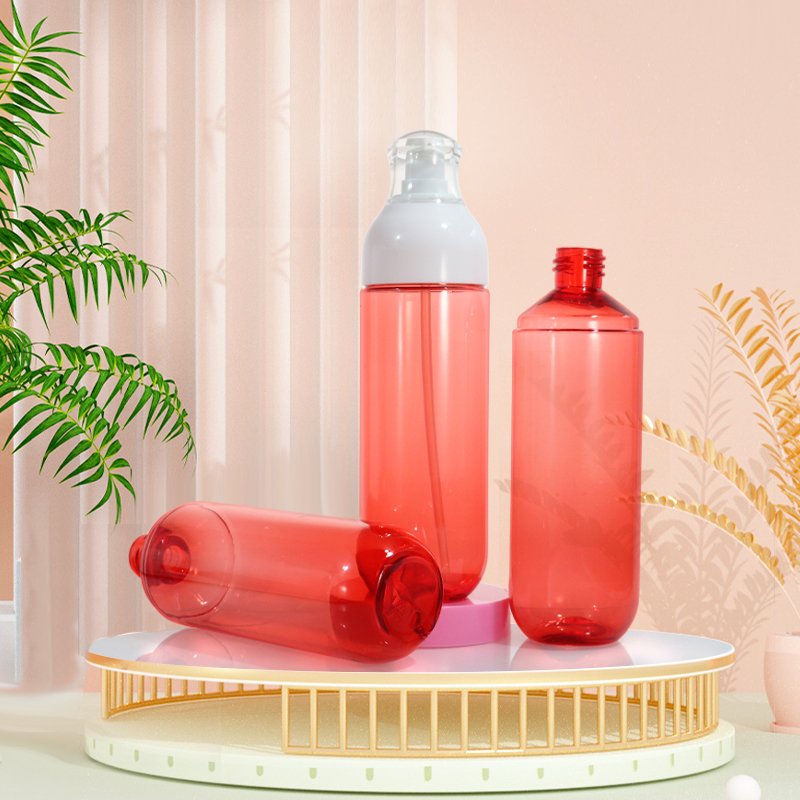
UV and visible light can oxidise active ingredients such as vitamin C, retinol and essential oils when they sit in clear bottles, cutting potency before the product is even opened. Amber, frosted or UV-additive bottles block 90 to 99 percent of harmful light depending on tint depth and wall thickness, which is why light-sensitive formulas should never ship in plain clear plastic.
A cosmetic formula is a balance of actives, and many of those actives dislike light. Vitamin C browns, retinol loses strength, and essential oils turn rancid when exposed to UV and even some visible light over weeks on a shelf or in a mailbox. The bottle is your first line of defence, and a clear one offers almost none. This guide covers why light breaks formulas down, which bottle options block it best, how material choice affects the tint, and how the closure completes the protection.
Protection at a glance
- Risk: UV and visible light can oxidise actives like vitamin C, retinol and essential oils in clear bottles.
- Fix: amber, frosted or UV-additive bottles block 90 to 99 percent of harmful light depending on tint and wall.
- ShiJin: 1,000+ molds, MOQ 5,000 units, 15-25 day production, amber PET and PETG available on request.
- Rule: pair opaque or amber bottles with airless or induction-sealed closures for full protection.
Why Light Breaks Down Formulas
Light carries energy, and some of that energy drives chemical reactions in your formula. UV wavelengths are the most aggressive, but a band of visible blue light also accelerates oxidation in sensitive actives. Vitamin C, a famously unstable antioxidant, browns and loses potency; retinol degrades toward inactive forms; and unsaturated oils pick up the off-smells of rancidity.
The damage is slow and silent. A clear bottle on a bright shelf or in a sunlit parcel may look perfect while the serum inside loses strength week by week, so the customer blames the brand, not the light. Our chemical compatibility guide explains how the formula and the container interact, and light is one of the interactions most often missed.
Not every product is at risk. A simple surfactant cleanser barely notices light, but any formula built around a flagship active should be treated as light-sensitive until proven otherwise.
Amber, Frosted or UV-Additive: Which Blocks Best?
Amber is the classic shield. A deep amber or brown tint absorbs most UV and a large share of visible light, typically blocking 90 to 99 percent of the harmful range depending on how dark the resin is. It is the safest default for truly photosensitive actives and is widely recognised by consumers as a protection signal.
Frosted bottles take a softer approach. A sprayed or etched matte finish scatters light and cuts transmission, though it blocks less than a full amber tint, so it suits moderate-risk formulas where you still want a light, premium look. Our frosted vs glossy guide compares the finishes and their trade-offs in clarity and cost.
UV-additive bottles are clear-looking but loaded with a compound that absorbs UV while letting visible light through, keeping a clean aesthetic with real protection. For the highest risk, an opaque or near-opaque bottle plus a UV additive is the strongest combination short of a metal can.
Which Resin Holds the Tint Best?
PET and PETG both take tint well, but they behave differently. PETG accepts deeper, more uniform colour and holds a richer amber or cobalt look, which is why it is popular for premium serums where the bottle itself signals protection. PET is the workhorse for clear and tinted bottles alike and tints cleanly at lower cost.
HDPE is naturally opaque and blocks light by itself, which makes it a quiet winner for light-sensitive creams and lotions where you do not need a see-through look. The trade-off is a softer, less glass-like appearance. Our PET vs HDPE vs PETG guide lays out where each material fits, and light blocking is one of the columns worth weighing.
Whichever resin you choose, ask for the tint by light-transmission target, not just by colour name, because two bottles called amber can block very different amounts of light.
How the Closure Completes Protection
The bottle blocks light from the sides; the closure blocks it from the top and seals the formula from air at the same time. An airless pump keeps the product away from oxygen and from light at the orifice, which is ideal for the most fragile actives. An induction-sealed or lined cap adds a tight barrier for jars and screw bottles.
For a dropper serum, pair an amber bottle with a dropper whose bulb and pipette are themselves shaded or minimised in clear exposure, because the dropper well is a small light entry point. Our airless vs regular pump guide explains why airless systems suit sensitive formulas beyond just light, and our dropper guide covers the serum-specific details.
Decoration matters too. A printed label that wraps the bottle adds a second light barrier, and our screen printing guide shows how a durable wrap can both brand and shield the product.
How to Choose for Your Product
Start from risk. If your hero active is vitamin C, retinol or a delicate oil, default to amber or opaque with a UV additive and an airless or induction-sealed closure. If the formula is moderately sensitive and look is the priority, a frosted or UV-additive clear bottle may be enough.
Then validate, because claims need proof. A simple light-exposure stability test, comparing your formula in a clear versus a tinted bottle over a few weeks, shows the real difference and gives you a defensible story for marketing. At ShiJin we run 1,000+ mold designs, MOQ 5,000 units and 15-25 day production, and we offer amber PET and PETG plus UV-additive options so the bottle matches the risk, not just the mood board.
Tell us your active and your stability concern. We will recommend a tint, a resin and a closure that block the wavelengths your formula fears, and we can supply samples so your lab confirms the protection before you commit to a run.
Frequently Asked Questions
Why does light damage cosmetic formulas?
Light carries energy that drives oxidation. UV is most aggressive, but a band of visible blue light also degrades sensitive actives such as vitamin C, retinol and essential oils, browning, weakening or ranciding them over weeks on a shelf or in transit.
Do amber bottles really block UV?
Yes. A deep amber or brown tint absorbs most UV and a large share of visible light, typically blocking 90 to 99 percent of the harmful range depending on tint depth and wall thickness. It is the standard default for photosensitive actives.
Is frosted or clear with UV additive good enough?
For moderate-risk formulas, yes. A frosted finish scatters and cuts light transmission, and a UV-additive clear bottle absorbs UV while staying see-through. For high-risk actives like vitamin C or retinol, a full amber or opaque bottle is safer.
Which plastic blocks light best?
HDPE is naturally opaque and blocks light by itself, good for light-sensitive creams where you do not need clarity. PETG takes the richest amber or cobalt tint for premium serums, while PET tints cleanly at lower cost. Ask for tint by light-transmission target, not just colour name.
Does the cap matter for light protection?
Yes. The closure blocks light from the top and seals out air. An airless pump keeps product away from oxygen and the orifice; an induction-sealed or lined cap adds a tight barrier for jars. Pair the right bottle with the right closure for full protection.
Matching bottle options for this topic
Real molds from our library in a comparable material and size class — each product page carries the full spec sheet, neck size, MOQ and lead time.
- PET Cosmetic Bottle 50ml — SKU SJT0507-50
- PET Cosmetic Bottle 250ml — SKU SJT0027-250
- PET Cosmetic Bottle 360ml — SKU SJT0489-360
- PET Cosmetic Bottle 750ml — SKU SJT0183-750
Protecting a light-sensitive formula?
Tell us your active and your stability concern. We run 1,000+ mold designs, MOQ 5,000 units and 15-25 day production, and we offer amber PET and PETG plus UV-additive options so the bottle blocks the wavelengths your formula fears. We can supply samples for your lab to confirm.
Browse Mold Library Request a Quote